
Made of Sterner Stuff: On Roald Dahl and ‘Love From Boy’

cover

As a fellow English boarding school veteran, I have always felt a certain kinship with Roald Dahl. His famous autobiography of his childhood, Boy, memorably captures the hierarchical structure of boarding school life, and although Dahl’s experiences were somewhat more brutal than my own (I was never forced to thaw a frozen lavatory seat with my own posterior) there is a definite sense of recognition in reading about his childhood days.

coverHowever, upon reading Love from Boy, a newly published collection of Dahl’s letters to his mother, I feel as though I may have to discard any claim to familiarity. As it turns out, there are even more differences between the boarding schools of the 1930s and those of the 2000s than were previously evident to me, and, if I learned anything about myself reading Love From Boy, it is that, had I been unfortunate enough to live in Dahl’s day, I probably would have ended up like “poor little Ford,” a briefly-mentioned fatality of one of the school’s many measles epidemics.

If the measles did not claim me, there would have been no shortage of other possibilities for a premature snuffing-out. Dahl, made of far sterner stuff, and arguably the most effortlessly macho of all 20th-century writers (including the posturing Ernest Hemingway), survived them all: being forced to fight a fire in his boarding house and then spending the night in the “black and charcoaly” building on “brown and nasty” beds; coming under fire when a student accidentally used live ammunition instead of blanks in a field-day training exercise; and experimenting with eating boiled lichen on a school trip to Newfoundland due to a lack of sufficient food.
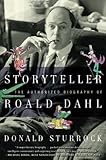
coverDahl detailed all of these horrors in regular letters to his beloved mother, and continued to write to her faithfully up until her death. Donald Sturrock, author of the acclaimed Dahl biography, Storyteller, collects a selection of over 600 of these surviving letters, dating from 1925 to 1965, in this new volume, entitled Love From Boy, after the phrase Dahl affectionately used to sign off his letters from school.

After he left boarding school, Dahl’s adventures continued and became even more outrageous. He moved to Africa, working in Tanzania and Kenya for Shell, where he contracted malaria, fought off a black mamba snake, and invented the game of strip darts. When war broke out in 1939, Dahl trained to become a pilot in Egypt, Iraq, and Greece. He shot down at least five enemy planes during the war before crash landing in the Libyan desert and being sent home to England to convalesce.

coverFollowing a chance encounter in a private London club, he was given a curious job offer and moved to Washington D.C. to work for the RAF. His military assignments there, as well as his own blossoming success as a freelance writer, soon launched him to the peak of American high society: he played tennis with Vice President Henry A. Wallace (winning 6-0, 6-0, 6-0), joined President Roosevelt for Thanksgiving dinner, went on a date with Ginger Rogers, attended a party with Charlie Chaplin, and worked on a major motion picture with Walt Disney. What is most extraordinary about this is the fact that it all took place decades before he found his ultimate success as a children’s writer, which would not come until 1961 with the publication of James and the Giant Peach.

These remarkable events (which must surely constitute one of the most interesting biographies of any writer) are all detailed in Dahl’s letters. Although one might feel a sense of unease reading or critically analyzing personal letters that were never meant for publication, Dahl’s may prove an exception since, as Sturrock argues, they were always written “primarily to entertain.” Therefore, although there might be a few personal details, such as inquiries about relatives, all in all the letters are highly accessible for those otherwise unfamiliar with Dahl’s life, and primarily document his extraordinary anecdotes in the ever-humorous style of a born entertainer.

My personal favorite of his many comical descriptions concerns the two elderly patients he shares a hospital room with after recovering from surgery, who fart “quite openly and unashamedly just as though it was like saying good morning.” For those (like myself) who are fond of these kinds of immature observations and jokes, there is plenty more to be found in Love from Boy, including Dahl’s description of a statue of a bison whose penis is painted bright red by vandals — “a very fine sight;” a picture by Dahl of “Hitler fucking himself,” annotated with an instruction to “note the smile of ecstasy on his face;” and a warning against the painting of toilet seats, lest some unfortunate “adhere to it,” followed by a conclusion that this would be “an excellent cure for constipation.” (Another difference between Dahl and myself: I would never dare to record any of these things in a letter to my mother, for fear she would be scandalized to the point of fainting, or worse.)

Although the letters themselves are fascinating and consistently funny, if the book has one flaw it may be that Sturrock tries too hard to force his theme of motherhood. It is clear that Dahl and his mother had a devoted relationship, but none of her letters survive, making the conversation in this collection entirely one-sided. Sturrock’s conclusion that Dahl’s mother “was an essential and invaluable foil” for the development of his writing is something we just have to take his word for. As a noted biographer of Dahl’s, it is likely that Sturrock is privy to more insights into her character than we are, so his conclusions may be valid — they are just not made immediately evident from what we have collected in Love from Boy.

covercovercoverNonetheless, the book does a valiant job of collecting these letters for the first time and providing sound biographical context for them. For fans of Dahl’s writing there is also an additional layer of enjoyment, as one can seek out potential origins for elements later found in his fictional works. One obvious example is the cat, Mrs. Taubsypuss, whom Dahl and his fellow Shell workers took care of in Dar es Salaam — she later gives her name to the U.S. President’s cat in Charlie and the Great Glass Elevator. Other more subtle details, such as Dahl’s descriptions of flying, may be the catalyst for scenes from his final book, The Minpins, which features miniature people flying on the backs of birds. Likewise, his eventual disillusionment with high society excesses (“Dinner of course was eaten off gold plate, but it tasted just the same”) may contain the seeds for the spoiled and greedy consumer-obsessed characters that populate Charlie and the Chocolate Factory.

Reading Love from Boy, one gets the sense that it was inevitable that Dahl would become a great writer. Not only did he get plenty of practice, composing a huge number of letters, all in a style that served to sharpen his skill as a humorist; but he also lived more in the 10-year period from his leaving school to the end of the war than most of us do in a lifetime. He carried with him a rich memory of innumerable fascinating anecdotes and ideas — enough to fill countless books. Love from Boy provides a wonderful summary of this extraordinary life and an intimate insight into his development as a writer. It will prove a charming read for anyone who has ever enjoyed his work. Plus (did I mention?) it also has lots of rude bits, which is always a nice bonus.

The post Made of Sterner Stuff: On Roald Dahl and ‘Love From Boy’ appeared first on The Millions.


from The Millions http://ift.tt/2cfvfVF

Comments

Popular posts from this blog

The Sphere

Photograph by Elena Saavedra Buckley. Once when I was about twelve I was walking down the dead-end road in Albuquerque where I grew up, around twilight with a friend. Far beyond the end of the road was a mountain range, and at that time of evening it flattened into a matte indigo wash, like a mural. While kicking down the asphalt we saw a small bright light appear at the top of the peaks, near where we knew radio towers to occasionally emit flashes of red. But this glare, blinding and colorless, grew at an alarming rate. It looked like a single floodlight and then a tight swarm beginning to leak over the edge of the summit. My friend and I became frightened, and as the light poured from the crest, our murmurs turned into screams. We stood there, clutching our heads, screaming. I knew this was the thing that was going to come and get me. It was finally going to show me the horrifying wiring that lay just behind the visible universe and that was inside of me too. And then, a couple se...

A Year in Reading: Daniel Torday

I’ve been on leave from teaching this year, so it’s been a uniquely good 12 months of reading for me, a year when I’ve read for only one reason: fun. Now when I say fun … I’m a book nerd. So I tend to take on “reading projects.” The first was to work toward becoming a Joseph Conrad completist. I’m almost there. I warmed up with critic Maya Jasanoff ’s The Dawn Watch: Conrad in a Global World , which granted me permission to remember the capacious scope of his perspective, his humanistic genius. His masterwork was hard work, but Nostromo belongs on the shelf of both the most important and most difficult of the 20th century. The Secret Agent blew the top of my head off—it’s funny and deeply relevant to our moment, about a terrorist bombing gone horribly wrong. Under Western Eyes is all I got left. 2018 isn’t over yet. But then much fun came in reading whatever, whenever. That started with a heavy dose of Denis Johnson . The new posthumous collection of his short stories, The Lar...

The Historical Future of Trans Literature

  Whatever happens against custom we say is against Nature, yet there is nothing whatsoever which is not in harmony with her. May Nature’s universal reason chase away that deluded ecstatic amazement which novelty brings to us.  —Michel de Montaigne If you were trying to get anywhere in the late thirteenth century, the Hereford Mappa Mundi would not have been particularly helpful; the map is rife with topographical omissions, compressions, and errors—the most egregious of which is perhaps the mislabeling of Africa as Europe and vice-versa. Of course, as any medievalist will tell you, mappa mundi were not intended for cartographic accuracy anyway. Rather, they were pictorial histories, encyclopedias of the world’s mythological and theological narratives, records of medical fact and fable. Notable places—Carthage, Rome, Jerusalem, Alexandria, Jericho—appeared, but their placement on the map emphasized their symbolic import, rather than their geographical specificity. Thus, ...