Here are eight notable books of poetry publishing in March.
Registers of Illuminated Villages by Tarfia Faizullah
A few years ago, I read “Poetry Recitation at St. Catherine’s School for Girls” in an issue of The Missouri Review, and reading it again feels like discovering a lost prayer. The narrator thinks of her teenage years at a school where girls, “headbands bright green or bangles / yellow, glints that fill the silence like / falling snow,” pray before a hanging cross. The girls “recite poems they // have carried in their mouths for days, / and my desire to go back, to be one / among those slender, long-haired girls // is a thistle, sharp and twisting at my / side.” Their words—“psalm, blessing, lord”—bring her back to that chapel where the priest spoke of an eternal world not possible for her: “the girl I was, heavy and slow in her / thick glasses, knew she would never / enter heaven.” The narrator calms her memory with a final note: “Help me, Lord. / There are so many bodies inside this one.” Tucked nearly halfway through Registers of Illuminated Villages, the poem reverberates elsewhere in the book, as in “Acolyte,” where she again feels “an infidel / in this classroom / church.” There, beneath the white cross and the “window-light” that moves across their bodies, “My mouth is avid; it // sings fidelis, fidelis.” But her mind travels to home, where “maa is in her / kitchen crooning / black-and-white film,” and “baba leans forward / in his chair, the Qur’an / open to the last page.” At school, she bows her head and whispers her own prayer—an affirmation. Faizullah’s entire collection—powerful, wide-ranging—is an affirmation, an accomplished second book. “This elegy is trying / hard to understand how we all become // corpses,” she writes, “but I’m trying to understand permanence.” This book gets us there.
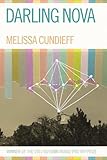 Darling Nova by Melissa Cundieff
Otherworldly, lilting—there’s a surreal touch to Cundieff’s verse that can be downright hypnotic. In “Everything Cruel Is Also Real,” we get a memory in second-person: “you in a yellow dress against the condition / of your kite string. Taut, it lifts you with a thinnest white, / unwinding, tethered to you, kept like a conversation within your fists.” The narrator wonders: “Surely I must be dead, / watching with hollowed-out joy, your physics reaping the late lawn / of its light.” (I’m grateful for poets who deliver consonance). The spirit of Cundieff’s style might be her willingness to offer us poems mid-glance, as in the aptly-titled “In Medias Res”: “I once imagined my life differently, / but no one hears, so I say it again, and again.” The world moves and moves in this book, and strangeness is a welcome song. In “Nostalgia for the Absolute,” there’s a tree with a plaque to memorialize a football player killed by a lightning strike. “There’s nothing special about his name, // William. It makes me think of any football field, / the girls whose toes get muddy from the steps taken up, // down the bleachers. Their blonde hair straight // like church windows that flood then burn with light.” The mystical breaks through even during a long car ride, a narrator chasing the eclipse, their fighting children in the backseat: “I daydream / that bridge bats rupture from beneath an overpass, shrill shapes / without course.”
 Footnotes in the Order of Disappearance by Fady Joudah
In “The Living Are the Minority,” “the dead don’t cry / and mindful of dehydration / they speak what they drink / and wave to their ventriloquists.” Minimal lines carry so much meaning here. Joudah also peppers his book with supple prose poems, their syntax delivering surprises. In “Horses,” it is a “December evening, smoke in the rain, awn of the rain, from virga to drizzle, a glimpse of horses through large wooden doors.” This is beautiful writing: “Foam in stalactites from equine jaws more exhausted than a crossroad. Steam rising to the roof. The sinews of their hearts. The women were one, the horses one.” What begins as a meditation on setting evolves to include the narrator, as when one of the women asks him how long he has been riding himself. He doesn’t know, but thinks of all “the horses I never rode, their magnetic fields filled with souls of past rides and horses’ past souls, even the plastic ones I used to line up on the sill.” Those fleshed narratives live among pithy exhales, like “1st Love”: “When God began you she / said to me one spring afternoon in bed / God began // with your hands / a woman’s hands // And when God reached your wrists / God made the rest of you man.” We often say that poetry transforms, but Joudah’s verse also transports.
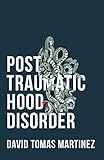 Post Traumatic Hood Disorder by David Tomas Martinez
In his first book, Hustle, and this new collection, Martinez draws on his early years in San Diego: fathering a son while in high school, joining a gang, and entering the Navy before being kicked out. A former junior-college basketball player, he mixes ambition and anxiety in poems like “And One”: “Look at the homie, / even when in a gang / he came home to crack Nietzsche.” Hope and nihilism live side by side on those streets, and in his scenes: “He’s going places. / Look at homie, trying to fix himself. Thinks / out of repetition comes variation.” Martinez’s book examines masculinity: particularly expectations of Chicano men, California men. There’s a real sadness here: the talent and dreams that never escape the city, an unfortunate truth that kids know early, and captured in poems like “Winter Night.” The narrator’s father beats him with a belt, but between the punishments, there is something like an opening: “After dinner my father sat on the floor / with his corduroy shorts riding up / his thighs while I put on boxing gloves / around his shadow. I floated, stung / I rode his shoulders over crowds, // raised my arms. The oversized gloves / on my hands were smaller, lighter / than my want to punch him.”
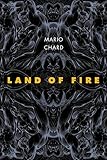 Land of Fire by Mario Chard
Early in Chard’s debut collection, among mystical visions and dialogues, is “The Oath,” a touching poem about an immigrant family’s arrival in a new land. A mother has her fingerprints taken, and is weighed before standing in line “with others taking turns / reciting words to make them / citizens.” When it is his mother’s turn, she “cleared her throat before / a word then said the word, / made the same sound / I knew to listen for / when I had lost her in a crowd.” That sound, her soul. “They took / her country when she spoke, / but the cords that first / learned Spanish in her throat / spoke first: last strain of loss / and its resistance.” Chard unearths those cautious moments, whether he is writing of this world, or of other worlds—Miltonic shadows, mythic planes. In “Dystocia,” “Sometimes a myth / delivers its prophet // breech.” In “Jorge, First Love of My Argentine Mother,” the weight of personal myths: “When you spoke you sounded like a man ignored, / one orphan speaking to another / who was not.” My favorite here: “Signs and Crossings,” arriving in a Trinitarian structure: the narrator watches a boy who sneaks through joined chain-link fences. “I have watched him make some crude sign of the cross / before his trespass here.” A storm blows out windows. Maples, “stripped for power lines,” are exposed before him—“a symbol of the brain: branched and leafy one side, / barren on the other.” A world, ravaged by storm, is what gives the narrator new sight. “We would make that sign again.”
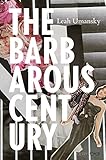 The Barbarous Century by Leah Umansky
Umansky quotes Gustave Flaubert early in her collection—“The principal thing in this world is to keep one’s soul aloft”—and that line becomes theme and center for the book. Here “Small girls dream while. / The most are slipped graces, / and many graces are slipped.” In this world, “It is hard to quiet the blackberrying pain. / The little chronicles, the streaks, and the intimate workings. // I will face this by red-winging my truths. / I will push my blues into orchids.” Umansky’s poems are expansive, quick, and rooted in a conversational interaction with the page. “I am the one holding the wheel,” she writes, “& the one tying us to the mast.” Yet there’s a refrain of slipping, of losing hold that is reflected in the way her lines careen across the page, a self searching for a steadiness: “You aren’t being robbed of time, / you’re just trying to get out of your landmarks. / You’re being robbed of the present by thinking of the future.”
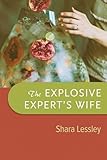 The Explosive Expert’s Wife by Shara Lessley
“The Ugly American” captures the spirit of Lessley’s book, one set in Amman, Jordan. Boys beat a jennet, a female donkey, “with sticks and switches and clods / of dirt.” The image of violence that opens the poem appears to validate the epigraph: Mark Twain’s stereotypical, dismissive opinion of the Middle East. But this book is aware of its framing. A pregnant woman, a foreigner, enters the narrative; she’s watching the attack, and picks up a stone. The woman “heard herself / curse, think every stupid soulless thing // she’d heard about the filth borne of this region.” A man breaks up the boys’ beating, and the woman, far away but watching, is forced to reckon with the moment: “Please / understand this isn’t metaphor: when // I dropped the rock, I had blood on my hand.” Based in part on Lessley’s years as an American expatriate, The Explosive Expert’s Wife is a narrative of listening and understanding. In “First Days: August”: “Nights stalled at the screen. I strain / to hear the call to prayer— / what is it Amman’s abandoned / streets are trying to say?” Often Lessley’s poems become laments: “A thousand candles light the Siq. / I grieve / the West, its disinterested ear.” Here Amman is not simply defined by its struggles; it is a world of small miracles, as in “Transfusion,” when the narrator’s peritoneum bleeds—but she is calmed and carried for, her child safe. “The gift comes slow,” she writes. “I listen to us breathe.”
 Cape Verdean Blues by Shauna Barbosa
Barbosa’s poems snap. “Every Year Trying to Get My Body Right”: on Frenchmen Street in New Orleans. Pickup truck with a broken rearview, her “scraped toes hanging out the passenger side. I keep the window open in the event I need to summer language my mouth into prayer.” One of the keys to prose poems that pulse is the internal rhythms of sentences (whispers of lines, memories of lines), as in a later poem on the sign of Cancer: “The moon is a hammock. A hammock is a moon. Loosen up Cancer. Lie down without moving, ask how she’s doing, and let the dead come.” The cadences of care move throughout this book, including “Making Sense of What We’re Made For”: “I like how the bottoms of my feet feel / like silence.” Those feet have “taken a beating . . . I sweat violence like ceremony.” There’s so much to appreciate in Barbosa’s debut—her humor, the spiritual touches that shine light on family and desire—but I especially like how she plays with the layering of language. Kriolu, the Cape Verdean tongue, cloaks this book. In “Broke,” the narrator’s aunt sweeps the Au Bon Pain in Harvard Square “like it’s a Saturday morning in her Cape Verdean home.” When her grandmother calls and yells at her in Kriolu, “I love how it sounds to be loved so fiercely in another language.” Language unites us, but the narrator knows otherwise in an earlier poem: “I know you don’t want to be / cause it’s difficult to be / black, Sis // knows / speaking Portuguese at the traffic stop / won’t save you.” And the sense of being displaced, in “GPS”: “there’s a Duane Reade a mile from Chinatown. It’s 96 degrees on a Saturday. My legs are wet. Sweat stings my contact lenses.” The narrator’s taxi driver is West African: “You are my sister, he says . . . I wanted to ask what his American woman looks like. A lot of time passes and I think about my old west African lover and feel bad for being so American.” You will nod your head, again and again, at lines from this book (“It’s profoundly normal to become fragile while ordering coffee.”) and titles (“You Will, Indeed, Always Be the Same Person After Vacation”).
The post Must-Read Poetry: March 2018 appeared first on The Millions.
from The Millions http://ift.tt/2Fg5jVw
Comments
Post a Comment