Fiona Mozley, the author of Man Booker shortlisted and Dylan Thomas Prize longlisted Elmet, wrote her debut novel while travelling between Peckham, in South London, and her nine to six job in Central London. She missed the landscape of northern England, which is where she grew up and where Elmet is set. Jotting down notes on her smartphone and laptop, she attempted to evoke this landscape during her daily commute, allowing a temporary respite from the daily grind.
Though we seldom see people writing on trains, many commuters read or browse aimlessly on their smartphones. Emily St. John Mandel, staff writer of The Millions, spoke of her subway writing habit in “Writing on Trains.” “With a combined total of six hours spent on a subway a week, it felt like extra time,” she says. Mandel sought out other writers who wrote on trains, including memoirist Julie Klam and novelist Joe Wallace. Klam appreciated the need to beat the clock and get down thoughts before her station, as opposed to the long hours she’d spend writing at home on her Mac.
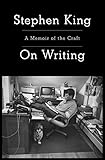
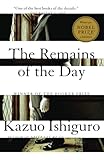 Many authors cite smartphones and the Internet as hindrances to creative writing. When Nobel Prize-winner Kazuo Ishiguro wrote The Remains of the Day, he did nothing but write from nine am to 10.30 pm for four weeks, during which time he wouldn’t go near his phone or email. In his popular book On Writing, Stephen King suggested writers eliminate distraction; “There should be no telephone in your writing room,” he wrote, “certainly no TV or video games for you to fool around with.”
Analogue writing setups of the past would offer fewer opportunities for distraction; the view from the open window and the kettle perhaps being the most enticing. Joyce Carol Oates, Jhumpa Lahiri, and Amy Tan still write their first drafts longhand, while Cormac McCarthy still types his manuscripts on an Olivetti Lettera 32.
When used productively, modern day technology can be transformed from a creativity-killing distraction to a convenient tool to note down those epiphanies or observations that would otherwise be forgotten.
 If Werner Herzog’s documentary Lo and Behold: Reveries of the Connected World holds any truth, modern technologies will soon become more integrated into our daily life. “You could essentially in the not too distant future, tweet thoughts,” Marcel Just, the D.O. Hebb University Professor of Psychology at Carnegie Mellon University tells Herzog. “So not type your little tweet, but think it, press a button, and all of your followers could potentially read it.” One day we might be able to transcribe words directly from our minds onto the page. The importance of writing, in the traditional sense, is evolving. Perhaps the romantic notion of putting a pen to paper might start to wane, as we see the value of being able to pluck ideas straight from the unconscious mind.
Unlike many in her field, Fiona Mozley embraced the convenience of technology. “When I started writing Elmet I used a Chromebook–one of those cheap laptops made by Google, which require the use of online apps,” she tells me. “That meant that the only word-processor available to me was Google Docs. That made it very easy to write on either my laptop or my phone as it was all the same document.”
“I find variety to be a real aid to writing,” she continues. “If I’m in a rut, I find the best remedy is moving to another location or altering my media. So if I’ve been writing for a while on my computer and I get stuck, I’ll go and pick up a pen and paper, or vice versa. The phone writing is really just tied to that overall process.”
The author wrote the first few paragraphs of her debut novel in spring 2013. She had just visited her parents for the weekend in West Yorkshire, a region previously known as Elmet, a Celtic Kingdom, between the fifth and seventh centuries. It was early on a Monday morning and she was returning to London by train. The importance of trains and train tracks in Elmet is emphasized even in the opening paragraphs:
I cast no shadow. Smoke rests behind me and daylight is stifled. I count railroad ties and the numbers rush. I count rivets and bolts. I walk north. My first two steps are slow, languid. I am unsure of the direction but in that initial choice I am pinned. I have passed through the turnstile and the gate is locked.
I still smell embers. The charred outline of a sinuous wreck. I hear the voices again: the men, and the girl. The rage. The fear. The resolve. Then those ruinous vibrations coursing through wood. And the lick of flames. The hot, dry spit. The sister with blood on her skin and that land put to waste. I keep to the railways track. I hear an engine far off in the distance and duck behind a hawthorn.
“The novel is all about isolation and marginalization, and being invisible in plain sight,” explains Mozley, “so it’s important that there are the trains running from London to Edinburgh just meters away from the little house in the copse, but none of the people on those trains knows anything about the lives being led there.”
While writing the early sections of her first draft, Mozley was working for a travel company in Central London and would jot down ideas on her smartphone during her journeys to and from work. Mozley says:
the sentences and paragraphs I wrote on my phone during my commute were very useful for keeping up the momentum. Sometimes when you’re writing–particularly if you’re working full time–you can have periods of writing nothing at all. Even if I found myself unable to write full sections, jotting ideas down on my phone meant that I felt a constant sense of progression.
Later in the writing process, Mozley got a MacBook and started using the popular writing app Scrivener. “It’s designed specifically for long writing projects, whether they’re novels or PhDs,” she says, “I find it to be a useful way of organizing chapters, drafts and research. There is an accompanying app for phones called Scrivo, which I also have. However, I don’t write much on my phone anymore because I don’t have a daily commute.”
Despite its contemporary context, reading Elmet, one cannot fail but notice that otherworldly quality. Writing the novel was a means of escapism for Mozley, who was not particularly content living in London. She elaborates:
London is a wonderful city, but it is a very difficult place to live unless you have an incredibly high salary or you come from a rich background. I have friends from university who still live there, who will never be able to afford a flat or house that they don’t share with several others. When I lived in London, there were five of us sharing a house and we didn’t have a communal living area because we’d had to turn it into an extra bedroom. For a while I shared a bedroom with a friend to keep the costs down. This kind of thing is typical, and while you could say that it’s normal or acceptable when you’re straight out of university, this is the kind of situation that my friends will be in for the foreseeable future, into their forties or even beyond. These are people with degrees from the University of Cambridge, and people who have good jobs – they’re just not lawyers or bankers. I left London a few years ago and returned to Yorkshire, where I have a much better quality of life. It would be a shame for London, however, if all the writers and artists are forced out. With Elmet, I wanted to experiment with the idea of a rent strike. I wanted to toy with the idea of all renters getting together and refusing to pay their landlords. They all just decide to live in their houses for free.
As a university graduate with no formal qualification in creative writing, and without external incentives or a deadline, the writing of Elmet came from within. It was something to distract from Mozley’s daily commute and financial hardships. She initially wrote with no long-term goals of publication:
I really had no idea what I was going to do with my life, so I wrote Elmet in order to have something outside of myself to think about. I guess you could call it “writing as therapy,” but it ended up being much more public. The otherworldly quality was always deliberate. Although it’s a contemporary novel, some of its major concerns are the thrall of history, the weight of the past, and the ways in which those things inform contemporary ways of life.
That deliberate otherworldly quality is effective in that we can imagine what lies beyond the train tracks and the fields that once belonged to the Celtic Kingdom of Elmet; and we can for a moment feel what the narrator Daniel sees and feels. Flexibility regarding the process enabled the author to record her astute observations and ideas with whatever she had to hand, as she felt them. As a consequence, the fictional Elmet feels like a world fresh from the unconscious mind.
While Elmet was still a work in progress, Mozley took on a role at a literary agency, where she realized that books are written by people not too different from herself. “In a way, I think I had always felt so removed from the sorts of people who become professional writers that it almost seemed like a fantasy profession,” she explains, “like ‘sorcerer’ or ‘superhero,’ not something that people actually did.” After working at the agency, however, writing professionally seemed a more attainable, realistic goal. Now writing with readers in mind, Mozley thought about what she wanted to convey to readers with Elmet:
I like fiction that provokes a sensory response. I wanted to address a number of issues in Elmet, and I would like to make people think, but primarily I want to make people feel. I’m fascinated by the idea that you can write words on a page that someone else goes on to read, and then that person might laugh out loud, or sweat with anticipation, or their breathing might quicken. I love the idea that fiction can have a physical response.

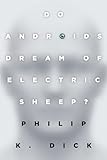 Mozley’s taste in literature is eclectic, to say the least. Her favourite opening to a novel is found in A Passage to India by E. M. Forster, while one of her favorite endings is in Do Androids Dream of Electric Sheep by Philip K. Dick. “I also read a lot of medieval literature, which unfortunately a lot of people find to be quite inaccessible,” she says. “I suppose Sir Gawain and the Greene Knight might be a good place to start because there are lots of modern editions. It’s not my favorite, though. That would probably be a short Middle English narrative called Cheuelere Assigne, which contains bestiality, swan transformations, and family drama.”
Upon leaving the literary agency, Mozley returned to her hometown of York, where she combined working part-time in a book shop with a doctorate in Medieval Studies.
With this new found confidence, a willingness to write using everything she had at hand at every opportune moment, and the tone imparted to her by the historical documents she worked with during her PhD, Mozley brought us Elmet—a lyrical novel that speaks simultaneously of a country for which I have nostalgia as an expatriate, and a place that seems to belong to the realm of dreams. John, described as a giant, has built a house with his own hands in an isolated wood set in the rugged landscape of rural Yorkshire. He earns money through underground fights, which he seldom loses. He protects his children, the narrator Daniel and his elder sister Cathy, from the real world, which at times seems cruel and unjust. Together they roll cigarettes, hunt for their food—tend to the house as their father goes out for days on end. As readers, we come to realize that their ancient way of life is threatened by the land ownership laws of modernity. And all of this takes place beyond the rail tracks, across the fields, in a place to which you or I will unlikely ever venture.
Fiona Mozley is currently halfway through her second novel. “I’m not saying much,” she says, “but I will say that it is very different from Elmet!”
The post Writing During Your Daily Commute: The Story of Fiona Mozley’s ‘Elmet’ appeared first on The Millions.
from The Millions https://ift.tt/2IWOykg
Comments
Post a Comment