In both Rumaan Alam’s second novel, That Kind of Mother, and Sheila Heti’s third, Motherhood, the functions and symbols associated with mothering—along with the ambivalence that can come with it—are conveyed with an authenticity that feels akin to reading nonfiction.
Because Alam’s work delves into racial complexities and blended family dynamics that accompany transracial adoption, he has a bit less wiggle room or freedom to roam than Heti, whose writing gives the impression of a woman loosed, set free from her inhibitions about contemplating (more so than anything, really, actively avoiding) becoming a mother as she nears 40.
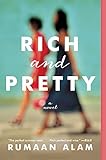 I read That Kind of Mother slowly, to savor it. I enjoyed Alam’s Rich and Pretty, recommended by a friend who shares my taste in books, but in That Kind of Mother, I saw the honing of a craft. There’s not much work for Alam to do in this arena, but for me, the matter of motherhood hits close to home—I am an adult orphan; my mother died six years ago. Even when she was alive, we had a bit of a challenging relationship; her mental illness required that I nurtured her more than I was nurtured. And this role reversal, which began when I was a young girl, alongside the general angst that women writers are almost conditioned to cultivate, fearing that I might not have the creative energy or time to write if I had children (more on that when we get to Heti) set up a pretty adversarial relationship between me and motherhood as a concept.
I like motherhood–outside of the toxic and damaging Mammy figure–as an idea. I love motherhood for other people. But I have never been able to shake having lunch with a Pulitzer Prize-winning author in Berkeley before leaving the Bay Area and asking her what she thought about having a child. “It is,” she said, “a ball and chain. You will be shackled for life.”
Alam’s book shows that not everyone feels this way–that for some, having a child is the best way to begin a family, to write one kind of story of self and to continually revise it as you go along. The main character, Rebecca, is a white woman poet, married to a busy, irritable Christopher. Their life is perfectly fine. At the start of the novel, they have one son, Jacob, who is cared for by their black nanny, Priscilla. Priscilla dies in childbirth, and Rebecca adopts her child, Andrew, despite the fact that Priscilla’s daughter, Cheryl, is living and has a respectable job as a nurse.
Rebecca decides, pretty much without consulting Cheryl, that she’ll adopt Andrew. This is not the kind of thing that would be without societal friction—the gaze of others, the discomfort of seeing mismatched skin between parents and child as if it were some kind of personal imposition—in 2018, let alone in 1985. “Let strangers think her ovaries had failed her; she didn’t want the baby who would one day be a boy hear his mother discussing him as she might new drapes, an exotic ingredient, fashionable sunglasses: as a thing so lovely that you ad to wonder about its acquisition,” Alam writes. “His story could not be easily summarized but Rebecca didn’t want to say even that.”
Rebecca is fascinating, irritating, and important. She epitomizes a very particular kind of white woman in our culture; one who is unnervingly earnest, who wants only recognition for trying to understand, even if she has no intention of believing, the lived experiences of the people she claims to want to understand and help. She does not know what she doesn’t know—like how to care for Andrew’s black skin, which she tells his sister is “just skin,” even though Cheryl rightly pushes back on that well-meaning dismissal. Rebecca believes that the power of her imagination and good will should be enough to triumph over the real world forces of racism that will alter the course of her sons’ lives differently.
As readers, we know this is why she doesn’t answer Andrew’s question, “Why are we a family?” as he grows older—because it is more complex a question than she would like it to be. She is trying to solve a problem in society that is beyond her powers, a problem that needs a lexicon she doesn’t have. Instead of admitting this, she lands on something that is not a lie, but not fully honest, either. That Kind of Mother is a novel that is also a way of helping contemporary readers with our current silences and fraught dialogues.
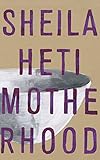 In Motherhood, Heti confesses with hilarious, quirky detail, that she basically wants to be anything in the world but a mother. The book is full of wit. I’m a person who dog-ears galleys for quoting, and I found something quotable on nearly every page. Using a faux system of divination in the tradition of I Ching, Heti voices the angst of women everywhere who worry that motherhood will become their central identity at the expense of everything else—though in some ways, women don’t really get to choose. Some of it cuts close to the bone, but I liked the sting and found it kind of delicious.
A woman must have children because she must be occupied…There’s something threatening about a woman who is not occupied with children.
Something about this seems true, but also like she would prefer it to be true. It was, again, hard for me to know, since, like most women readers in particular, I have my own subjective view of motherhood, the lens through which I think about such things. I found this quote most resonant:
The most womanly problem is not giving oneself enough space or time, or not being allowed it. We squeeze ourselves into the moments we allow, or the moments that have been allowed us. We do not stretch out in time, languidly, but allot ourselves the smallest parcels of time in which to exist, miserly. We let everyone crowd us…Having a child solves the impulse to give oneself nothing. It makes that impulse into a virtue. To feed oneself last in self-abnegation, to fit oneself into the smallest spaces in the hopes of being loved—that is entirely feminine. To be virtuously miserly towards oneself in exchange for being loved—having children gets you there fast.
Whether one agrees or not with Heti’s assertions or follows her arguments with herself, Motherhood is the most refreshing novel I’ve read in a long time on this topic. It’s made bittersweet by the fact that in the end, she reveals that she actually just wants what many of us want, which is the approval of her mother. She is still her mother’s daughter, awaiting word that even writing these truths is okay. She probably won’t have a child of her own to look for her approval.
The post On Motherhood, Rumaan Alam, and Sheila Heti appeared first on The Millions.
from The Millions https://ift.tt/2x3MoxD
Comments
Post a Comment