Kingsley Amis is best remembered today as the author of comic novels—perhaps even the pre-eminent writer in that genre during the second half of the 20th century. But you would hardly guess it if you looked just at his output from the late 1960s to the mid-1970s. This was Kingsley Amis’s midlife crisis, and it showed up in the strangest sort of way.

 Most comedians have a secret hankering for tragedy. But not Kingsley Amis. He was now determined to aim low, not high. His new plan involved a full-fledged assault on genre fiction in every one of its manifestations. In The Anti-Death League (1966) he embraced science fiction, and in The Green Man (1969) he delivered a horror story about ghosts haunting a country inn. The Riverside Villas Murder (1973) is an old-school British detective story, while The Alteration (1976) is an alternative history about England in a world that had never experienced the Reformation.

 All this happened in the aftermath of Amis’s 1965 divorce from Hilary Ann Bardwell after more than 15 years of marriage. Amis was trying to make a new start with second wife Elizabeth Jane Howard, a marriage also destined for acrimony and eventual divorce. He was under severe financial pressure and gaining weight during this period—while also gaining a reputation as a very heavy drinker.
In the words of his biographer Zachary Leader, Amis had started treating alcohol as a “a hobby or interest, like jazz or science fiction.” Alexander Waugh would later claim that you could tell Amis had a serious drinking problem just by looking at photos of him from his late middle age onward—travails indicated by a “resplendent sheen on his forehead” which reflected a kind of boozer’s sweat, and a bewildered and aggressive demeanor known as a “Scotch gaze” to those familiar with the facial expressions of patrons leaving the bar at closing time.
Other aging males in this situation would solve their midlife crisis by buying a fancy sports car, but Amis didn’t know how to drive. So instead he turned to James Bond. Agent 007 was truly the right hero for the right author, a stylish gent who could save the world, meet a deadline, and still not miss cocktail hour. If Bond could defeat SPECTRE and SMERSH, surely he could help a 40-something bloke get back on his feet again?
 Thus began Amis’s most ambitious genre gambit from this period, his 1968 spy novel Colonel Sun. Using the pseudonym Robert Markham, Amis had now shifted allegiances from Lucky Jim Dixon to the more debonair James Bond. This must have seemed like a huge opportunity at the time. Ian Fleming, the creator of James Bond, had died in 1964 at the very moment when the franchise was taking off. The film Goldfinger, released almost exactly a month after the author’s fatal heart attack at age 56, made it into the Guinness Book of World Records as the fastest-grossing movie to date. The film, shot for a budget of just $3 million, went on to earn $125 million at the box office—the biggest moneymaker of the year. After Fleming’s death, Amis had a legitimate opportunity to step into the driver’s seat of the hottest genre property of the era.
“I do expect to make quite a lot of money out of the venture,” Amis admitted in a 1968 article for The Observer. I’m hardly surprised. Ian Fleming ranks as the highest-earning British crime-fiction writer of all time, and his estate collected royalties on the sales of a staggering 60 million books during the two years following the author’s death. Amis only needed to hold on to this installed base of James Bond fans to ensure a life of wealth and luxury.
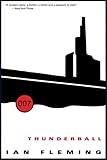 But Amis also ardently defended the move on its purely literary merits. A few years earlier, Amis had responded to criticisms of Fleming’s Thunderball with one of the most cogent arguments ever made for the worthiness of escapist fiction. “I think wish fulfillment is a common and normal human activity…No adult ought to feel like an adult all the time.” Even if the Bond novels simply served as a means of compensating for adolescent inferiority complexes, they would be “praiseworthy rather than blameworthy on that ground.”
This revealing comment from 1965 was made at the very outset of Amis’s plunge into genre fiction. He clearly felt that no apologies need be made for this choice, which could have unintended benefits for the psychic health of Britain’s youth. Yet there’s some heavy irony in the fact that Ian Fleming himself created the character of James Bond at the outset of a midlife crisis of his own. And he defended his decision in even more crass terms than did Amis. In 1962, in his treatise on “How to Write a Thriller,” Fleming admitted to inherent laziness and claimed that his secret to success was simply churning out 2,000 words per day and not thinking too much about it. “I never correct anything and I never go back to what I have written,” Fleming boasted. “If you once look back, you are lost. How could you have written this drivel?” Above all, Fleming cautioned against “introspection and self-criticism.” If you give in to those, “you will be lucky if you write 500 words a day and you will be disgusted with them into the bargain.”
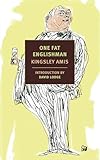
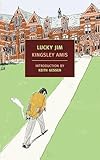 Could Kingsley Amis really follow in the footsteps of an author with such an untutored technique? Could the droll humorist behind Lucky Jim and One Fat Englishman—and one of the most pleasing prose stylists of the post-WWII literary world—really match the snap, flash, and slapdash approach of Ian Fleming, a man who learned how to write by drafting memorandums for British Naval Intelligence?
 Certainly Amis pared down his writing style for this project. He makes no attempt to draw on his nonpareil skill in comic fiction—a strange decision, given the successful moments of dark humor starting to show up in the successful James Bond movies around this same time. There’s hardly a metaphor in sight in these pages, nothing highbrow or poetic—with the strange exception of recurring parallels with the myth of Theseus inserted into Colonel Sun, a plot twist that would never have come from the pen of Mr. Fleming.
Amis, in other words, took great pains to imitate the Bond formula, or at least is superficial trappings. We know for a fact that he studied Fleming’s work with care and took copious notes. (For example, on the jacket of one Bond book, Amis wrote: “B. smiles 13 times by p. 165.”) And in many passages, he comes up with a reasonable facsimile of the original.
But in many other respects, the James Bond in these pages is unrecognizable. In the first big fight scene, Bond actually runs away from his attackers. In two other key confrontations, Bond comes up a duffer, incapable of effective action and forced to rely on his amateur associates to save him from sure death. He doesn’t even remember to use the fancy gadgets given him by Q at the outset of the story—in fact, James Bond’s most high-tech weapon in the decisive battle here is a knife. Above all, our superspy 007 shows himself susceptible to “introspection and self-criticism”—the two qualities most despised by Ian Fleming.
In other regards, Amis actually manages to surpass Fleming. His James Bond savors his booze like a connoisseur and never settles for a boring martini, shaken, not stirred. Amis’s sense of setting and landscape is outstanding, and the reader can tell that he carefully scouted out the Greek locations that serve as the backdrop for most of Colonel Sun. The psychological aspects of the story are deft and convincing, and they reveal a protagonist with a high degree of poise and self-awareness.
In other words, James Bond, in these pages, bears a striking resemblance to Kingsley Amis. Or at least to a somewhat improved Mr. Amis, as he might have preferred to see himself in his 40s. Yes, genre fiction is a kind of wish fulfillment.
Alas, this was not the formula that James Bond fans were looking for back in 1968. Colonel Sun sold reasonably well but not at the level of an Ian Fleming book. Even today, after 26 Bond movies, no one has tried to turn Amis’s effort into a film. And for good reason—this story isn’t especially cinematic and skips over the very elements that fans have come to love most in 007 films: outrageous exploits, flippant attitudes, and super-duper spy equipment.
 The great oddity is that Kingsley Amis was perfectly well-equipped to bring those ingredients into the story. His mistake was to base his approach on the Ian Fleming novels rather than the even more successful Sean Connery movies that might have nudged him into a different direction. Instead, Amis came up with a protagonist as dry as those famous shaken martinis.
 But there was one silver lining to this clouded outcome. Amis gave up spy fiction and soon returned to his forte, the comic novel. In 1986, he even won the Booker Prize for The Old Devils—beating out Margaret Atwood’s The Handmaid’s Tale in the process. By this point, Amis had settled into the role of the irritable and beloved curmudgeon. It wasn’t quite like being a superspy—or even the author of a superspy bestseller—but it was the best possible typecasting: the part Amis was always really meant to play.
Image: Flickr/Tom Woodward
The post 50 Years Ago, Kingsley Amis Had a Midlife Crisis and Turned to James Bond for Help appeared first on The Millions.
from The Millions https://ift.tt/2NqR4kw
Comments
Post a Comment