
A Year in Reading: Nick Ripatrazone

I carried Katie Ford’s If You Have to Go with me for much of this year—the book lingers, and is as fine a work of longing as I have ever read. Ford is a poet of unique and deep emotion, and she is also a student of theology, and that union fills a need that I share with many readers. A space for wonder and doubt.

In my interview with Ford for The Millions, she felt that “readers are tired of ironic renderings of faith and doubt. I think people want to believe the author is sincere.” The poets who I am drawn to the most in this particular moment—Ford, Ada Limón, Jericho Brown, Traci Brimhall—encounter faith and doubt with refreshing sincerity. I have my own beliefs; I don’t look to poets for that. I look to poets for a language for a weary soul. I want to see how others envision the absence or presence of God, and I find poets particularly gifted in that practice.
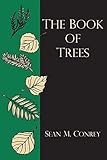
cover

Add to that list a book that I discovered this year: The Book of Trees by Sean M. Conrey. An interpretation of the life and hymns of Saint Columba, Conrey’s book brings us to the Druidic and Catholic traditions of Ireland. It is an otherworldly book; sincere in its own way, and admirable in its project.

What I like most about poetry is the second lap: the return, months and years later, to pages and sections. I suspect that I will return again and again to pieces like “Apple”: “On the days the winds blow ill I enter them, / and on the days they lift the world, too—.”

And “Vine”: “Weave the words into the world, / vines threaded through the trellis— / the cordon reaching out / like a brother’s call across the field, / clusters and tendrils, the occasional spur— / the Father is the gardener.”

More from A Year in Reading 2018

Do you love Year in Reading and the amazing books and arts content that The Millions produces year round? We are asking readers for support to ensure that The Millions can stay vibrant for years to come. Please click here to learn about several simple ways you can support The Millions now.

Don’t miss:A Year in Reading 2017201620152014201320122011201020092008200720062005

The post A Year in Reading: Nick Ripatrazone appeared first on The Millions.


from The Millions http://bit.ly/2V6PTvd

Comments

Popular posts from this blog

The Beautiful Faraway: Why I’m Grateful for My Soviet Childhood

At 10 I wanted to be an artist, practiced a hysterical form of Christianity, talked to trees, and turned a sunset at a local park into a visionary experience. My great-aunt lured me to Evangelical Christianity with the strangeness of Gospel stories where Jesus always ended up angry at his disciples’ failure to understand. I sympathized with being misunderstood, and latched on. Besides, Christianity was a forbidden fruit in Soviet Russia so I had to worship in secret. This was unnerving but also alluring. I was a breathless romantic who wanted to be surprised by a knight on a white horse. From the early ‘80s to the early ‘90s, my childhood was formed by the images, atmosphere, and allusiveness of Soviet songs. I grew up in an artistic family where emotions flew high. I was the kind of imaginative child who could spin an entire tale from an oblong stain on the kitchen table. But there’s more to it than that. My family was not always idealistic or romantic, especially not in New York in...

Dressing for Others: Lawrence of Arabia’s Sartorial Statements

Left: T. E. Lawrence; Right: Peter O’Toole in Lawrence of Arabia (1962) In the southwest Jordanian desert, among the sandstone mountains of Wadi Rum, there is a face carved into a rock. The broad cheeks and wide chin are framed by a Bedouin kuffiyeh headdress and ‘iqal, and beneath the carving, in Arabic, are the words: “Lawrence The Arab 1917.” If you are visiting Wadi Rum with a tour guide, you can expect to be brought to this carving. You may also be shown a spring where Lawrence allegedly bathed, as well as a mountain named after his autobiography, The Seven Pillars of Wisdom, whose rock face has been weathered into a shape that does, from some angles, look a little like a series of pillars. I am familiar with the legend of T.E. Lawrence—fluent Arabist, British hero of the Arab Revolt of 1916, troubled lover of the Arab peoples—as well as with the ways the Jordanian tourism industry has capitalized on this legend. Nevertheless, I am still surprised when I hear someone mentio...

Philistines

Welcome to Disney World! Photograph courtesy of Wikimedia Commons. 1. Once I had to go to Disney World with my small children. On the way to the airport our taxi driver exhibited signs of Obsessive Disney Disorder—when he found out where we were going he started obsessively describing and listing and explaining everything that had to do with Disney World, even though he was a grown man. We stayed at the Portofino Bay Hotel, a Disney-owned property that is a replica of the storied village on the Italian Riviera. There were imitation Renaissance churches and Mediterranean piazzas clustered around a fake harbor with old Fiats parked on the cobblestones and fishing boats moored in the fake bay. Outside cafés ranged on the harbor, serving espresso under green-and-white striped awnings. Italian cypresses were planted along the pools. If you didn’t know it was a Disney replica of a real place, it would have to be characterized as being extremely tasteful and lovely. So you did tend to ge...