
Selika, Mystery of the Belle Epoque

We’re away until January 2, but we’re reposting some of our favorite pieces from 2018. Enjoy your holiday!
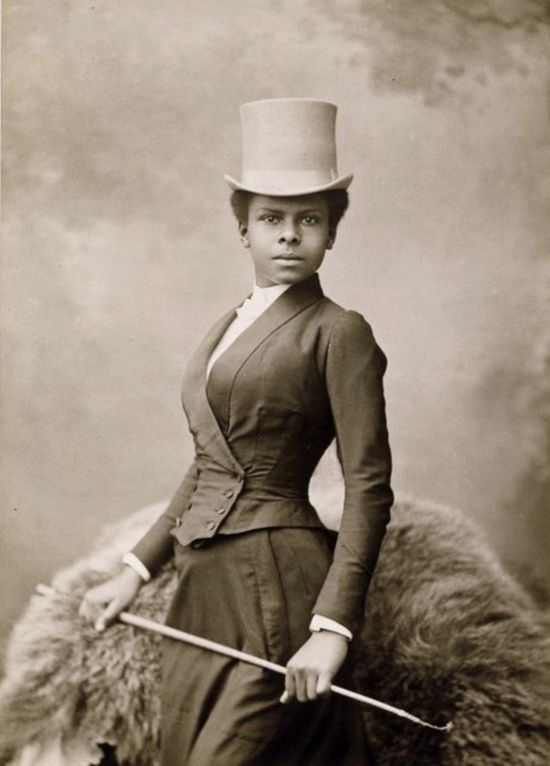
Selika Lazevski exists in six black-and-white photographs and nowhere else. I first saw her when those six studio portraits appeared on Tumblr in 2012. They quickly spread around the Internet as readers asked, Who is she? But although I’ve searched for years, every pin I place to try to map the real woman snaps and slides out of place, multiplying new leads that take me nowhere. I wrote a blog post about her name, guessed the wrong photographer, and saw my error replicate around the Internet, too, even turning up in the publicity materials for a short film about Selika. This much I do know: she was a black amazone in Belle Epoque Paris, a city where black “Amazons” were shown in a human zoo; she was a celebrity who left no other trace than these six tokens of her celebrity; she was a horsewoman without a horse, a power hinted at but not granted.

Read more >>


from The Paris Review http://bit.ly/2TdFsUJ

Comments

Popular posts from this blog

Dressing for Others: Lawrence of Arabia’s Sartorial Statements

Left: T. E. Lawrence; Right: Peter O’Toole in Lawrence of Arabia (1962) In the southwest Jordanian desert, among the sandstone mountains of Wadi Rum, there is a face carved into a rock. The broad cheeks and wide chin are framed by a Bedouin kuffiyeh headdress and ‘iqal, and beneath the carving, in Arabic, are the words: “Lawrence The Arab 1917.” If you are visiting Wadi Rum with a tour guide, you can expect to be brought to this carving. You may also be shown a spring where Lawrence allegedly bathed, as well as a mountain named after his autobiography, The Seven Pillars of Wisdom, whose rock face has been weathered into a shape that does, from some angles, look a little like a series of pillars. I am familiar with the legend of T.E. Lawrence—fluent Arabist, British hero of the Arab Revolt of 1916, troubled lover of the Arab peoples—as well as with the ways the Jordanian tourism industry has capitalized on this legend. Nevertheless, I am still surprised when I hear someone mentio...

23 Notable Kiswahili Novels

Kiswahili is spoken widely in Eastern Africa and parts of Central Africa. The language has morphed into different dialects spoken in these countries and is well documented in a rich literary tradition. Even though this collection centers on 20th century fiction, the Kiswahili literary tradition spans various genres and time periods. Swahili novels known as […] from Brittle Paper https://ift.tt/2TFnCfP

The Beautiful Faraway: Why I’m Grateful for My Soviet Childhood

At 10 I wanted to be an artist, practiced a hysterical form of Christianity, talked to trees, and turned a sunset at a local park into a visionary experience. My great-aunt lured me to Evangelical Christianity with the strangeness of Gospel stories where Jesus always ended up angry at his disciples’ failure to understand. I sympathized with being misunderstood, and latched on. Besides, Christianity was a forbidden fruit in Soviet Russia so I had to worship in secret. This was unnerving but also alluring. I was a breathless romantic who wanted to be surprised by a knight on a white horse. From the early ‘80s to the early ‘90s, my childhood was formed by the images, atmosphere, and allusiveness of Soviet songs. I grew up in an artistic family where emotions flew high. I was the kind of imaginative child who could spin an entire tale from an oblong stain on the kitchen table. But there’s more to it than that. My family was not always idealistic or romantic, especially not in New York in...