Women’s Prize for Fiction Names 2019 Longlist

covercovercovercovercovercovercovercovercovercovercovercovercover cover cover

Previously known as the Bailey’s Prize for Fiction (2013-2016) and the Orange Prize for Fiction (1996-2012), the Women’s Prize for Fiction announced its 2019 shortlist today. The award, created in the wake of a 1991 all-male Booker Prize shortlist, celebrates “excellence, originality and accessibility in women’s writing from throughout the world.” The longlist, which includes seven debut novels, is as follows (with bonus links when possible):

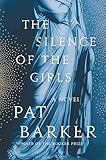
The Silence of the Girls by Pat Barker (also nominated for the 2018 Costa Book Awards shortlist and featured in our September Preview)
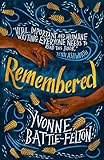
Remembered by Yvonne Battle-Felton
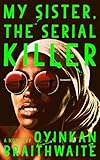
My Sister, the Serial Killer by Oyinkan Braithwaite (featured in our November Preview)
The Pisces by Melissa Broder (mentioned in Marta Bausell’s 2018 Year in Reading and interviewed by The Millions here)
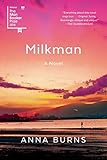
Milkman by Anna Burns (winner of the 2018 Man Booker Prize)
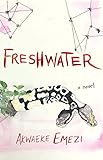
Freshwater by Akwaeke Emezi (mentioned in not one, or even two, but three Year in Reading posts; Emezi was also a 5 Under 35 honoree this year)
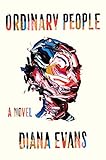
Ordinary People by Diana Evans (featured in our September Preview)
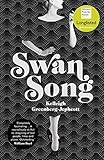
Swan Song by Kelleigh Greenberg-Jephcott
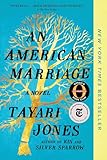
An American Marriage by Tayari Jones (February Preview)
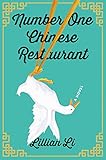
Number One Chinese Restaurant by Lillian Li (interview with Li here, plus mentions in quite a few of our Year in Reading posts)
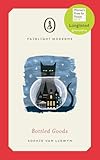
Bottled Goods by Sophie van Llewyn
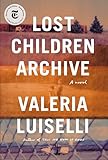
Lost Children Archive by Valeria Luiselli (featured in two Previews and two Year in Reading posts)
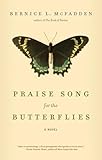
Praise Song for the Butterflies by Bernice L. McFadden (praised in Margaret Wilkerson Sexton’s Year in Reading)
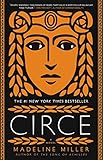
Circe by Madeline Miller (Steph Opitz’s , Marta Bausells’s, and Kaulie Lewis‘s Year in Reading)
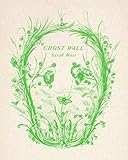
Ghost Wall by Sarah Moss (reviewed here and here)
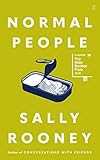
Normal People by Sally Rooney (in two 2018 Year in Reading posts)

The shortlist will be announced on April 29th, and the winner will be selected on June 5th.

The post Women’s Prize for Fiction Names 2019 Longlist appeared first on The Millions.


from The Millions https://ift.tt/2SJSZCK

Comments

Popular posts from this blog

The Sphere

Photograph by Elena Saavedra Buckley. Once when I was about twelve I was walking down the dead-end road in Albuquerque where I grew up, around twilight with a friend. Far beyond the end of the road was a mountain range, and at that time of evening it flattened into a matte indigo wash, like a mural. While kicking down the asphalt we saw a small bright light appear at the top of the peaks, near where we knew radio towers to occasionally emit flashes of red. But this glare, blinding and colorless, grew at an alarming rate. It looked like a single floodlight and then a tight swarm beginning to leak over the edge of the summit. My friend and I became frightened, and as the light poured from the crest, our murmurs turned into screams. We stood there, clutching our heads, screaming. I knew this was the thing that was going to come and get me. It was finally going to show me the horrifying wiring that lay just behind the visible universe and that was inside of me too. And then, a couple se...

A Year in Reading: Daniel Torday

I’ve been on leave from teaching this year, so it’s been a uniquely good 12 months of reading for me, a year when I’ve read for only one reason: fun. Now when I say fun … I’m a book nerd. So I tend to take on “reading projects.” The first was to work toward becoming a Joseph Conrad completist. I’m almost there. I warmed up with critic Maya Jasanoff ’s The Dawn Watch: Conrad in a Global World , which granted me permission to remember the capacious scope of his perspective, his humanistic genius. His masterwork was hard work, but Nostromo belongs on the shelf of both the most important and most difficult of the 20th century. The Secret Agent blew the top of my head off—it’s funny and deeply relevant to our moment, about a terrorist bombing gone horribly wrong. Under Western Eyes is all I got left. 2018 isn’t over yet. But then much fun came in reading whatever, whenever. That started with a heavy dose of Denis Johnson . The new posthumous collection of his short stories, The Lar...

The Historical Future of Trans Literature

  Whatever happens against custom we say is against Nature, yet there is nothing whatsoever which is not in harmony with her. May Nature’s universal reason chase away that deluded ecstatic amazement which novelty brings to us.  —Michel de Montaigne If you were trying to get anywhere in the late thirteenth century, the Hereford Mappa Mundi would not have been particularly helpful; the map is rife with topographical omissions, compressions, and errors—the most egregious of which is perhaps the mislabeling of Africa as Europe and vice-versa. Of course, as any medievalist will tell you, mappa mundi were not intended for cartographic accuracy anyway. Rather, they were pictorial histories, encyclopedias of the world’s mythological and theological narratives, records of medical fact and fable. Notable places—Carthage, Rome, Jerusalem, Alexandria, Jericho—appeared, but their placement on the map emphasized their symbolic import, rather than their geographical specificity. Thus, ...