
I See the World

We’re away until January 4, but we’re reposting some of our favorite pieces from 2020. Enjoy your holiday!
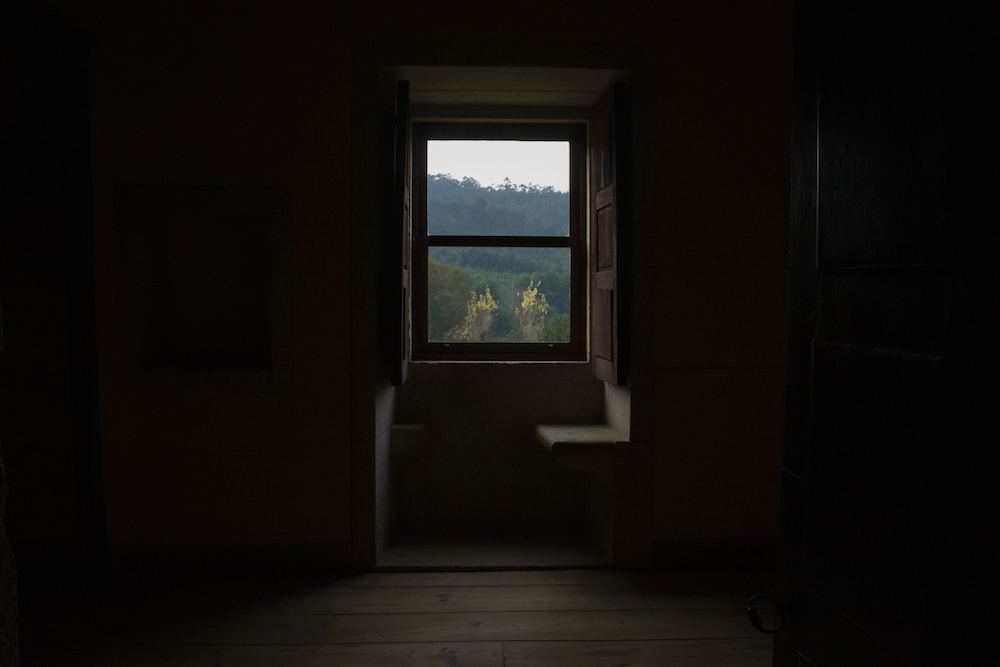
© robert / Adobe Stock.

It begins in this way:

It’s as if we are dead and somehow have been given the unheard-of opportunity to see the life we lived, the way we lived it: there we are with friends we had just run into by accident and the surprise on our faces (happy surprise, sour surprise) as we clasp each other (close or not so much) and say things we might mean totally or say things we only mean somewhat, but we never say bad things, we only say bad things when the person we are clasping is completely out of our sight; and everything is out of immediate sight and yet there is everything in immediate sight; the streets so crowded with people from all over the world and why don’t they return from wherever it is they come from and everybody comes from nowhere for nowhere is the name of every place, all places are nowhere, nowhere is where we all come from …

Read more >>


from The Paris Review https://ift.tt/2M6BTBq

Comments

Popular posts from this blog

The Beautiful Faraway: Why I’m Grateful for My Soviet Childhood

At 10 I wanted to be an artist, practiced a hysterical form of Christianity, talked to trees, and turned a sunset at a local park into a visionary experience. My great-aunt lured me to Evangelical Christianity with the strangeness of Gospel stories where Jesus always ended up angry at his disciples’ failure to understand. I sympathized with being misunderstood, and latched on. Besides, Christianity was a forbidden fruit in Soviet Russia so I had to worship in secret. This was unnerving but also alluring. I was a breathless romantic who wanted to be surprised by a knight on a white horse. From the early ‘80s to the early ‘90s, my childhood was formed by the images, atmosphere, and allusiveness of Soviet songs. I grew up in an artistic family where emotions flew high. I was the kind of imaginative child who could spin an entire tale from an oblong stain on the kitchen table. But there’s more to it than that. My family was not always idealistic or romantic, especially not in New York in...

Philistines

Welcome to Disney World! Photograph courtesy of Wikimedia Commons. 1. Once I had to go to Disney World with my small children. On the way to the airport our taxi driver exhibited signs of Obsessive Disney Disorder—when he found out where we were going he started obsessively describing and listing and explaining everything that had to do with Disney World, even though he was a grown man. We stayed at the Portofino Bay Hotel, a Disney-owned property that is a replica of the storied village on the Italian Riviera. There were imitation Renaissance churches and Mediterranean piazzas clustered around a fake harbor with old Fiats parked on the cobblestones and fishing boats moored in the fake bay. Outside cafés ranged on the harbor, serving espresso under green-and-white striped awnings. Italian cypresses were planted along the pools. If you didn’t know it was a Disney replica of a real place, it would have to be characterized as being extremely tasteful and lovely. So you did tend to ge...

Portrait of the Philosopher as a Young Dog: Kafka’s Philosophical Investigations

Nicolas Gosse and Auguste Vinchon, Cynic philosopher with his dog (1827). Public domain, via Wikimedia Commons . Franz Kafka’s story “Investigations of a Dog” might be retitled “Portrait of the Philosopher as a Young Dog.” In any event, Kafka did not assign a title to the story, which he left unpublished and unfinished. It was Max Brod who named it Forschungen eines Hundes , which could also be translated as “Researches of a dog,” to give it a more academic ring. But the term investigations has its fortuitous resonances in the history of modern philosophy. The dog’s investigations belong to a great line of theoretical endeavors, like Wittgenstein’s Philosophical Investigations , with its retinue of animals, dogs included; or Husserl’s Logical Investigations , which launched his new science of consciousness, phenomenology; or Schelling’s Philosophical Investigations into the Essence of Human Freedom , even more to the point since this is how the dog’s investigations end, with the ...