Every week, the editors of The Paris Review lift the paywall on a selection of interviews, stories, poems, and more from the magazine’s archive. You can have these unlocked pieces delivered straight to your inbox every Sunday by signing up for the Redux newsletter.
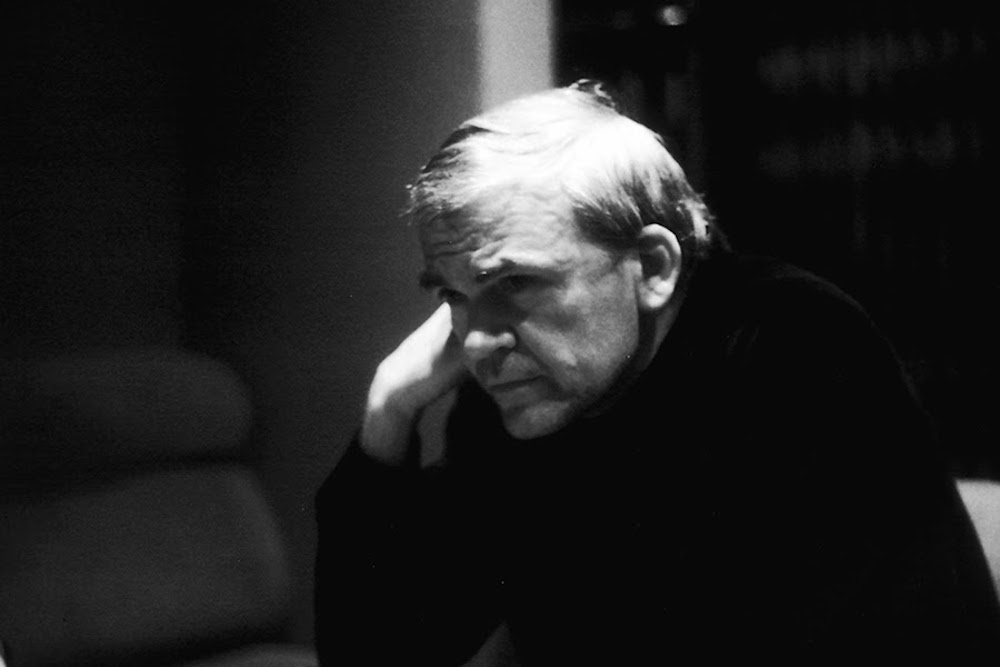
Milan Kundera, ca. 1980. Photo: Elisa Cabot.
This week at The Paris Review, we’re spending too much time online. Read on for Milan Kundera’s Art of Fiction interview, Hiromi Kawakami’s short story “Mogera Wogura,” and Stephen Dunn’s poem “Historically Speaking.”
If you enjoy these free interviews, stories, and poems, why not subscribe to The Paris Review? You’ll also get four new issues of the quarterly delivered straight to your door. Or, subscribe to our new bundle and receive Poets at Work for 25% off.
Milan Kundera, The Art of Fiction No. 81
Issue no. 92 (Summer 1984)
Today one can compose music with a computer, but the computer always existed in composers’ heads—if they had to, composers could write sonatas without a single original idea, just by “cybernetically” expanding on the rules of composition. Janáček’s purpose was to destroy this computer … My purpose is like Janáček’s: to rid the novel of the automatism of novelistic technique, of novelistic word-spinning.
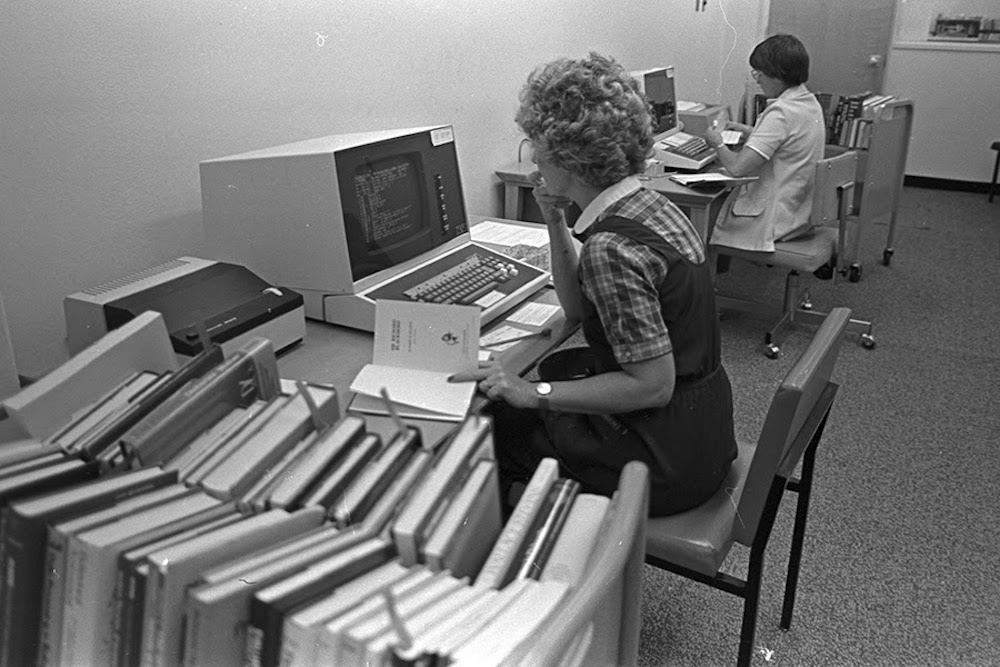
Photo: University of Texas at Arlington Photograph Collection. CC BY 4.0 (https://ift.tt/12IBHf3), via Wikimedia Commons.
Mogera Wogura
By Hiromi Kawakami, translated by Michael Emmerich
Issue no. 173 (Spring 2005)
The young humans who have joined the company in recent years don’t even seem to notice how different I look. I don’t think they consciously decide not to wonder about me, why my form is so unlike theirs; they simply can’t be bothered. People sometimes make comments—“You’re pretty hairy, aren’t you?”—but no one openly stares at me anymore, or presses me for information about my background. Until a decade or so ago, people really gossiped a lot.
I sit at my computer until lunchtime, mostly dealing with statistics. Sometimes a young woman comes from general affairs and asks me to write out an address on an envelope in calligraphy, using a brush. I’m a good calligrapher. Everyone says I write sharper-looking characters than anyone else in the company.
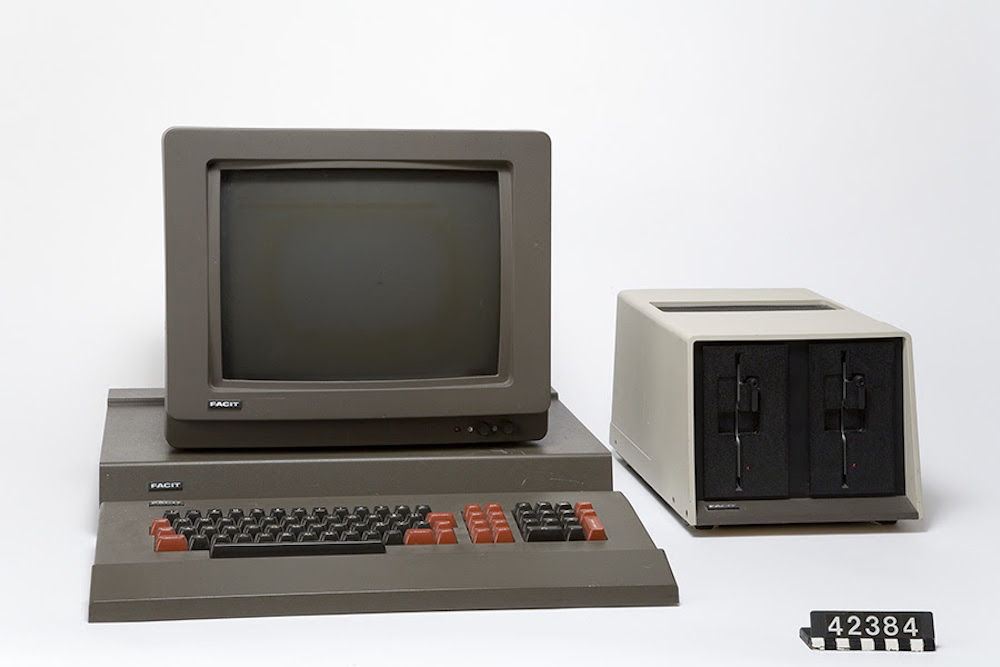
Photo: Ellinor Algin. CC BY 4.0, (https://ift.tt/12IBHf3), via Wikimedia Commons.
Historically Speaking
By Stephen Dunn
Issue no. 219 (Winter 2016)
It was a year of pirates in speedboats,
anonymous bullies spreading privacies
on the Internet, and the worst of them
doing worse than that and wishing to be known
for what they’d done, their perfidy
an advertisement for a cause.Thus it was a bad year for historians,
whose stories couldn’t be correct
for longer than a few days. More than ever
the imperfections of memory
would combine with the slipperiness
of documentation to produce versions
only people who need not be persuaded
could agree with …
If you enjoyed the above, don’t forget to subscribe! In addition to four print issues per year, you’ll also receive complete digital access to our sixty-eight years’ worth of archives. Or, subscribe to our new bundle and receive Poets at Work for 25% off.
from The Paris Review https://ift.tt/3sz3wmf
Comments
Post a Comment