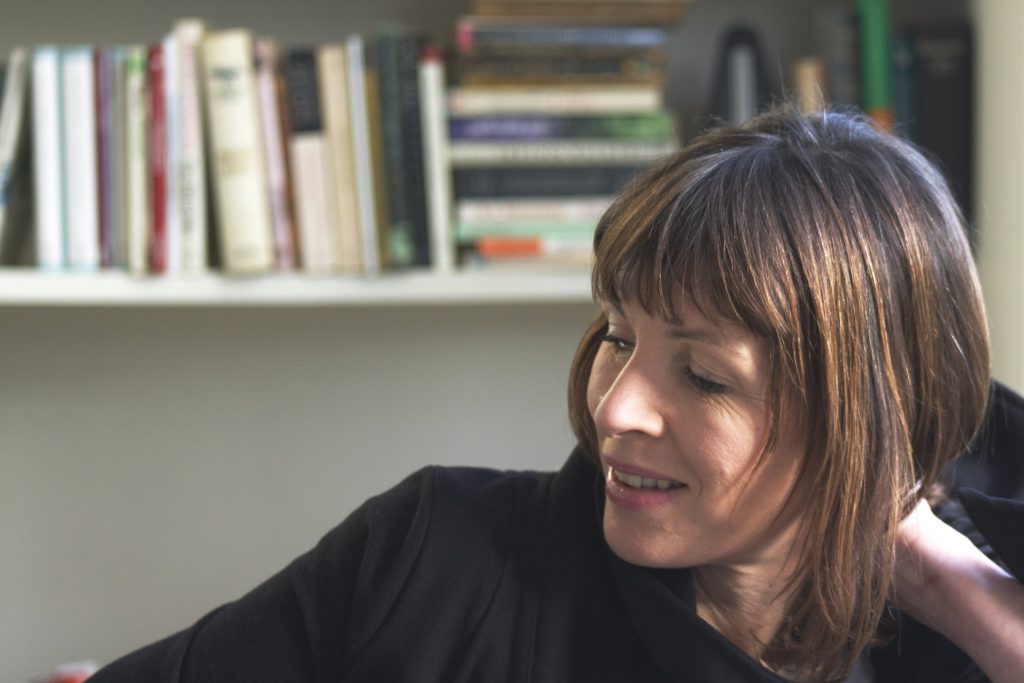
Rachel Cusk. Photo: Siemon Scamell-Katz.
There is a Joni Mitchell live album called Miles of Aisles, recorded while she was on tour in 1974. Caught on the recording is her response—in a slightly Dylan-esque posture—to the crowd’s wild chanting for a particular number. She complains that other artists don’t have to deal with this kind of crap: “Nobody ever said to Van Gogh, ‘Paint a Starry Night again, man!’ ” I think she’s wrong, though. The anticipation for Rachel Cusk’s new novel Second Place has been as close to feverish as we get in certain circles, and it is in part because Cusk answers the call to “paint a Starry Night again” so well. Much has been said in the past weeks about what we particularly want from Cusk and why. In fact, if you are a person who reads The Paris Review’s staff picks, you have likely read two or three meditations on the subject. Whatever it is we want from her, Second Place delivers it in spades. And in the dynamism of a truly great writer, the novel seems written just for the spring of 2021 but was actually inspired by the memoir of Mabel Dodge Luhan, a patron who played host to D. H. Lawrence in Taos, New Mexico, in 1932. In Second Place, it is late spring on the English coast. Our narrator and her second husband invite a world-famous artist—now out of fashion—to use the second place on their property. He ends up arriving with a youngish woman of no defined role or position. If the opposition of these two relationships didn’t recreate enough refraction, our narrator’s daughter from a previous marriage and the daughter’s boyfriend come to stay as well. Cusk gives us three “stages of women,” leaving hints of female truths I’ll carry for the rest of my life, and no small amount of lush, threatening scenery. The Starry Night, I learned recently, was not universally loved at first. Only with the dedication of Van Gogh’s sister-in-law Jo van Gogh-Bonger, who peddled his troubled genius to the world, did we end up with refrigerator magnets and mouse pads. Although it’s in every job description, creativity is hard to see and harder to live with. We are taught to want it and fear it in equal measure. Among many other things, Cusk shows us this in Second Place, and I hope she never does it quite the same way again. —Julia Berick
Molly Bolt is one of my favorite characters in all of literature. A bit of a wild card, whip smart, unbelievably driven, and an all-around badass, she’s the star of Rubyfruit Jungle, Rita Mae Brown’s queer coming-of-age novel. Originally published in 1973, Rubyfruit Jungle follows Molly from her poverty-stricken childhood in Pennsylvania and Florida to her young adulthood in New York City, where she sleeps with a parade of women and works her way through NYU with the goal of becoming a film director. The book is, in a lot of ways, a product of its time; in other ways, it’s very much ahead of the curve. All anyone expects of Molly is marriage, despite the fact that she has absolutely no interest in men. She adamantly refuses to get hitched and become a “breeder”; she’d much rather “be arrested for throwing an orgy at ninety-nine.” Molly’s hilarious—I mean laugh-out-loud funny. And while the book gives her the space to feel down and angry at the homophobia she faces and the poverty she experiences, she always soldiers on. She’s driven by her ambition to make her movies, even if she has to fight until she’s fifty. “But if it takes that long then watch out world,” she says, “because I’m going to be the hottest fifty-year-old this side of the Mississippi.” —Mira Braneck
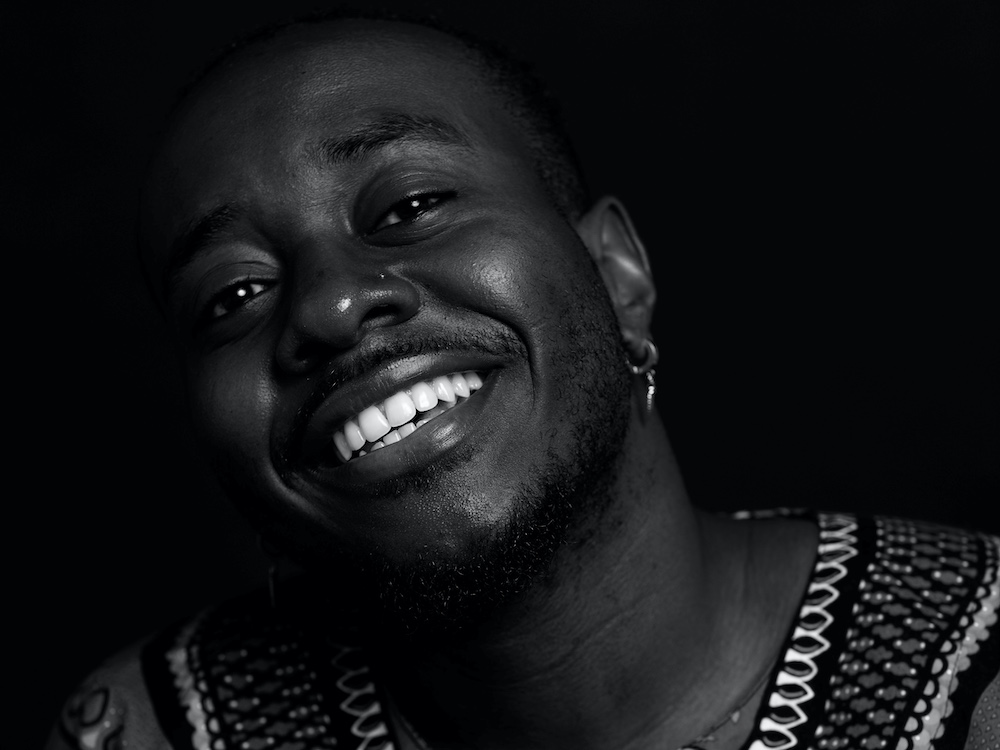
Cheswayo Mphanza. Photo: Azeez Alayah. Courtesy of University of Nebraska Press.
I often find myself a little jealous of photographers and filmmakers, and the immediacy of the images that constitute their art. Part of the appeal of writing can be how not immediate it is, how it requires narrative explanation in order to set a scene or argue an idea, but some days I wish I were wielding a camera, not a pen. A line from Cheswayo Mphanza’s poem “Notes toward a Biography of Henry Tayali”—which appears in his debut collection, The Rinehart Frames—perfectly illustrates the conundrum: “Photography is best for its simple truth: thought is brief, whereas the image is absolute.” Somehow, in poems that borrow techniques from Abbas Kiarostami’s film 24 Frames, Mphanza fuses word and image in such a way that it feels as though I am reading a photograph. And when he explores the disparities of language, history, colonialism, and power, in poems like “Djibril Diop Mambéty’s Scene Descriptions” (“Sinking back into bed where he learns making love is immigrating to someone. A citizen who feigns to be a refugee under the tender weight of skin and its nudging.”), this technique is used to its fullest, resulting in some of the most memorable lines in the book. “My dreams are becoming more cinematic,” notes the first line of “Frame Ten”—and the same could be said of this collection, too. —Rhian Sasseen
Readers of the Daily might be familiar with Barrett Swanson’s “Political Fictions: Unraveling America at a West Wing Fan Convention” or “For Whom Is the Water Park Fun?,” both of which are now collected in his debut essay collection, Lost in Summerland. My own introduction to Swanson’s exquisite prose and equally impressive examination of place was the book’s opening essay, “Notes from a Last Man,” which initially had me worried: the piece is set in my native Fort Lauderdale, Florida, an easy target for any visitor keen on mocking the coastal extravagance of a subtropical economy dependent largely upon the merrymaking tactics of tourism. But when the essay juxtaposed the lyrics of “patron saint of Miami pop” Pitbull with the post–Franco-Prussian War writing of Friedrich Nietzsche and the hedonistic absurdity and “older American ethos” of a cruise line’s television advertisement, all in the context of Swanson’s own general sadness and anxiety, I felt that, and I realized that his writing is not at all interested in mockery, but camaraderie. The brilliance of these essays is their ability to illuminate the personal through the critical, the political, and the unflinching specifics of place while shining a light into that seemingly distant ideal—the universal. The closing essay, “Church Not Made with Hands,” builds ideas of faith and communion into an enchantingly hopeful description of marriage, and I can’t help but think of the promise we all make every time we choose to open a book, “vowing to see the world not through the myopia of I, but the panorama of us.” —Christopher Notarnicola
In honor of the latest installment of Valerie Stivers’s Eat Your Words, “Cooking with Sigrid Undset,” I would like to offer another extraordinary way into the work of the Nobel-winning Norwegian novelist. I wish I could say the family copy of Kristin Lavransdatter is a treasured possession and favorite read-aloud book in our home, but in fact the mammoth tome lives on a secret shelf under our coffee table, where our puppy is unable to fulfill her urgent desire to chew on it. No, my family loves Undset because she is the inspiration for one of our favorite animated short films, Torill Kove’s The Danish Poet. Although this adorable and deeply moving cartoon, narrated by the legendary Liv Ullmann, won an Academy Award, it’s got the terrifying word poet in the title, so I fear many have ignored it. I’d like to remedy that situation right now. The Danish Poet follows its eponymous writer on a journey to love and literary inspiration, traveling by boat between Denmark and Norway and through the pages of Kristin Lavransdatter. The film involves outlandishly long hair, missed connections, a credible examination of where people come from, and the story of two unlikely pairs of lovers. I entreat you to watch it now—I promise you fifteen minutes of screen time you won’t regret. It’s kid friendly but adult sophisticated, and it holds a spot on my short list of Best Things Ever. I hope you feel the same way. —Craig Morgan Teicher
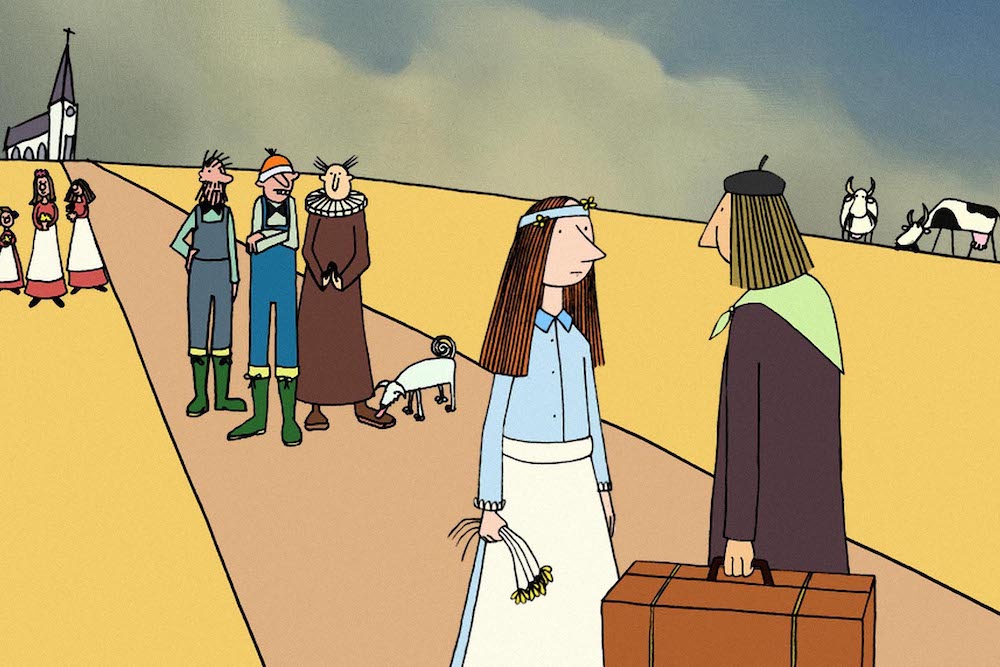
Still from Torill Kove’s The Danish Poet, 2006.
from The Paris Review https://ift.tt/3tPaP9W
Comments
Post a Comment