
Redux: The Name like a Net in His Hands

Every week, the editors of The Paris Review lift the paywall on a selection of interviews, stories, poems, and more from the magazine’s archive. You can have these unlocked pieces delivered straight to your inbox every Sunday by signing up for the Redux newsletter.
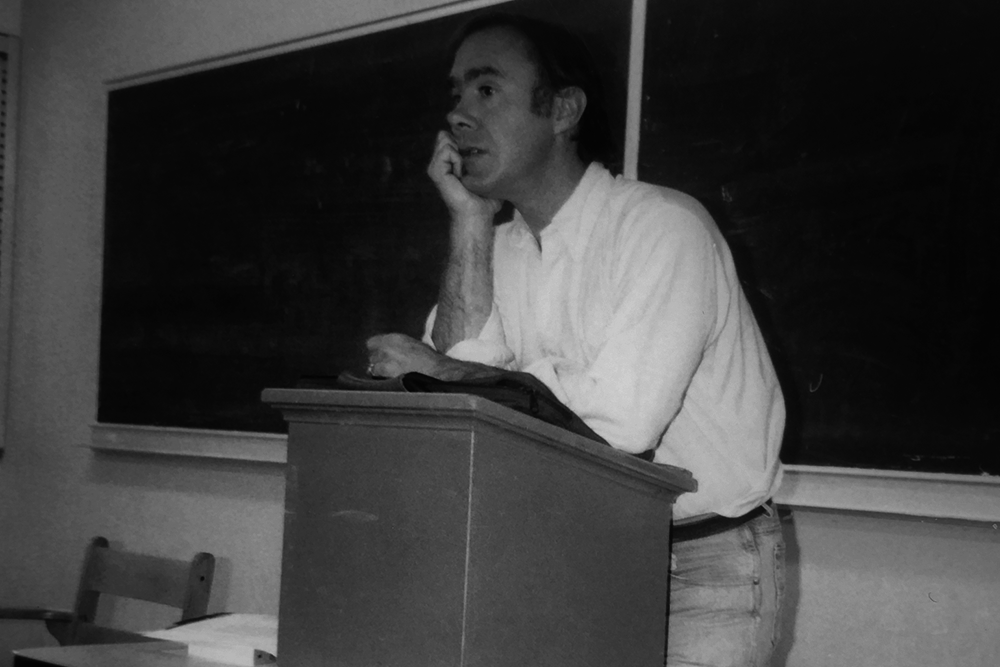
Hass teaching at St. Mary’s College, ca. 1977. Photo courtesy of the author.

This week at The Paris Review, we’re thinking about fatherhood and Father’s Day. Read on for Robert Hass’s Art of Poetry interview, Jonathan Escoffery’s short story “Under the Ackee Tree,” and Louise Erdrich’s poem “Birth.”

If you enjoy these free interviews, stories, and poems, why not subscribe to The Paris Review? You’ll also get four new issues of the quarterly delivered straight to your door. Or, subscribe to our new bundle and receive Poets at Work for 25% off.


Robert Hass, The Art of Poetry No. 108
Issue no. 233 (Summer 2020)

When you’re taking care of small children, it’s the one time when you don’t have to ask what the meaning of it all is. The meaning is to get through the day without closing a car door on their fingers.
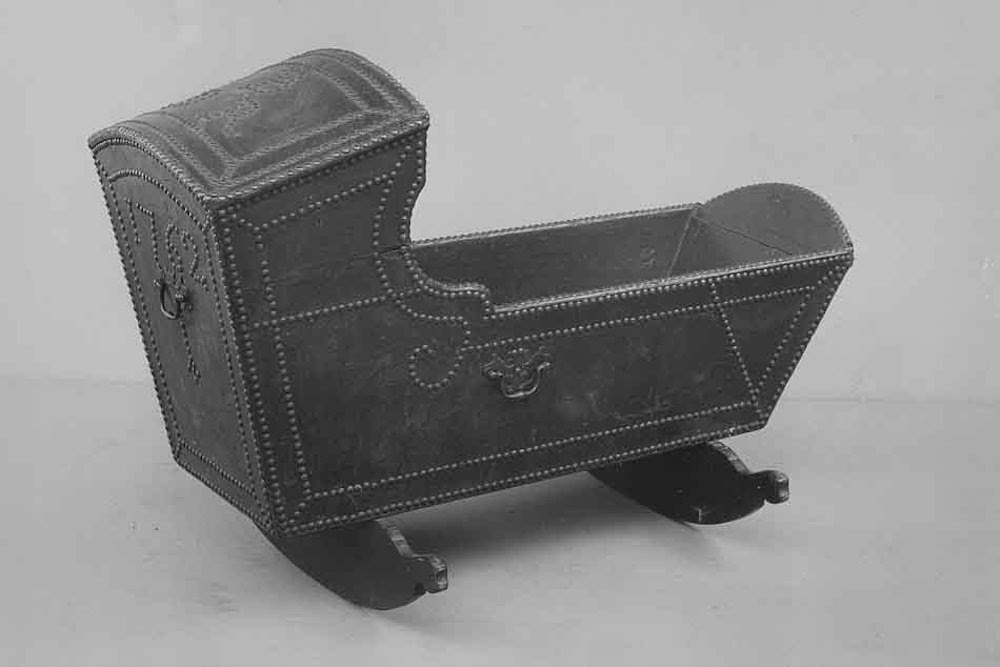
 

Cradle, 1762, mahogany and white pine, 30 1/2 x 27 1/2 x 46″. The Metropolitan Museum of Art, New York. Gift of Cecilia E. Brinckerhoff, 1924 (24.143).


Under the Ackee Tree
By Jonathan Escoffery
Issue no. 229 (Summer 2019)

You name your second son Trelawny to remind yourself of home. It long enough after you reach that you miss JA bad-bad. You miss walk down a road and pick Julie mango off street side. When you try pick Miami street-side mango, lady come out she house with rifle and shoot your belly and backside with BB. In the back of your Cutler Ridge town house, you start try grow mango tree and ackee tree with any seeds you come by, but no amount of water or fertilizer will get them to sprout.


Birth
By Louise Erdrich
Issue no. 111 (Summer 1989)

When they were wild
When they were not yet human
When they could have been anything,
I was on the other side ready with milk to lure them,
And their father, too, the name like a net in his hands.


If you enjoyed the above, don’t forget to subscribe! In addition to four print issues per year, you’ll also receive complete digital access to our sixty-eight years’ worth of archives. Or, subscribe to our new bundle and receive Poets at Work for 25% off.


from The Paris Review https://ift.tt/3jb75Oi

Comments

Popular posts from this blog

The Sphere

Photograph by Elena Saavedra Buckley. Once when I was about twelve I was walking down the dead-end road in Albuquerque where I grew up, around twilight with a friend. Far beyond the end of the road was a mountain range, and at that time of evening it flattened into a matte indigo wash, like a mural. While kicking down the asphalt we saw a small bright light appear at the top of the peaks, near where we knew radio towers to occasionally emit flashes of red. But this glare, blinding and colorless, grew at an alarming rate. It looked like a single floodlight and then a tight swarm beginning to leak over the edge of the summit. My friend and I became frightened, and as the light poured from the crest, our murmurs turned into screams. We stood there, clutching our heads, screaming. I knew this was the thing that was going to come and get me. It was finally going to show me the horrifying wiring that lay just behind the visible universe and that was inside of me too. And then, a couple se...

Dressing for Others: Lawrence of Arabia’s Sartorial Statements

Left: T. E. Lawrence; Right: Peter O’Toole in Lawrence of Arabia (1962) In the southwest Jordanian desert, among the sandstone mountains of Wadi Rum, there is a face carved into a rock. The broad cheeks and wide chin are framed by a Bedouin kuffiyeh headdress and ‘iqal, and beneath the carving, in Arabic, are the words: “Lawrence The Arab 1917.” If you are visiting Wadi Rum with a tour guide, you can expect to be brought to this carving. You may also be shown a spring where Lawrence allegedly bathed, as well as a mountain named after his autobiography, The Seven Pillars of Wisdom, whose rock face has been weathered into a shape that does, from some angles, look a little like a series of pillars. I am familiar with the legend of T.E. Lawrence—fluent Arabist, British hero of the Arab Revolt of 1916, troubled lover of the Arab peoples—as well as with the ways the Jordanian tourism industry has capitalized on this legend. Nevertheless, I am still surprised when I hear someone mentio...

A Year in Reading: Daniel Torday

I’ve been on leave from teaching this year, so it’s been a uniquely good 12 months of reading for me, a year when I’ve read for only one reason: fun. Now when I say fun … I’m a book nerd. So I tend to take on “reading projects.” The first was to work toward becoming a Joseph Conrad completist. I’m almost there. I warmed up with critic Maya Jasanoff ’s The Dawn Watch: Conrad in a Global World , which granted me permission to remember the capacious scope of his perspective, his humanistic genius. His masterwork was hard work, but Nostromo belongs on the shelf of both the most important and most difficult of the 20th century. The Secret Agent blew the top of my head off—it’s funny and deeply relevant to our moment, about a terrorist bombing gone horribly wrong. Under Western Eyes is all I got left. 2018 isn’t over yet. But then much fun came in reading whatever, whenever. That started with a heavy dose of Denis Johnson . The new posthumous collection of his short stories, The Lar...