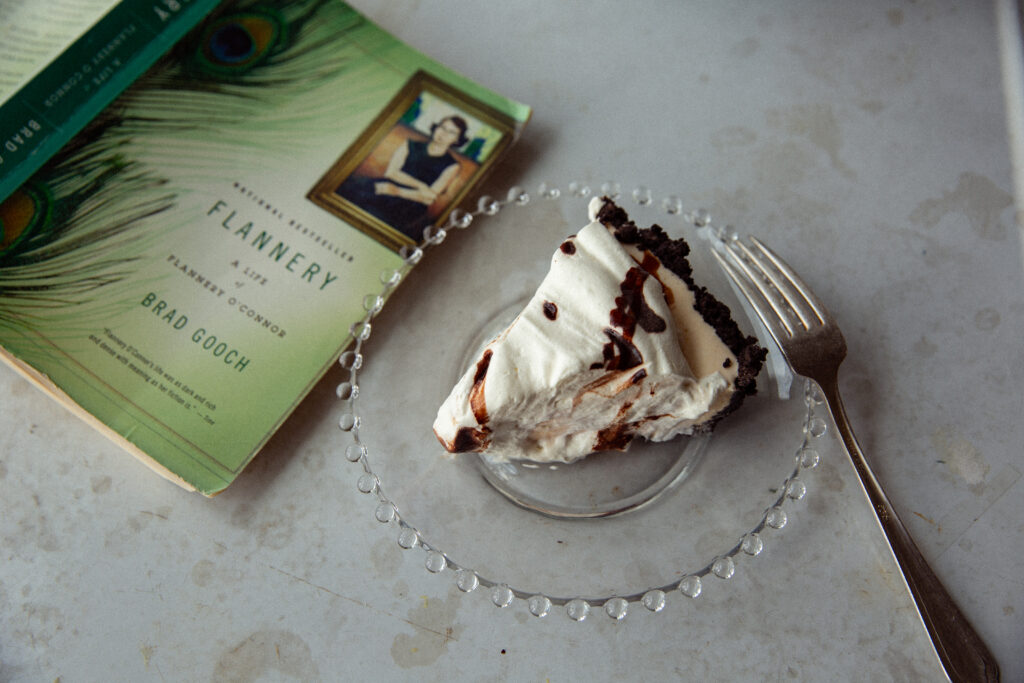
Photograph by Erica MacLean.
Flannery O’Connor’s favorite meal at the Sanford House restaurant in Milledgeville, Georgia, where she lunched regularly with her mother, was fried shrimp and peppermint chiffon pie. O’Connor, after a diagnosis of lupus brought her home to Milledgeville in 1951, led a life in a farmhouse outside of town with her domineering mother, Regina, that bore some resemblance to a nun’s. Every morning started with Catholic Mass followed by cornflakes and a thermos of coffee in her spinster bedroom while she wrote for three hours. The writing time, she said, was her “filet mignon.” Otherwise it seems she found most pleasures, especially the physical kind, to be base. In her fiction an amorous girl goes up to the hayloft with a man and gets her wooden leg stolen in the story “Good Country People.” Two girls make themselves hot, bothered and ridiculous laughing over a nun’s claim that their bodies are “a temple of the Holy Ghost” in a story of that name. And yet somehow O’Connor’s lunch order—which captured my imagination when I read about it in Brad Gooch’s biography, Flannery—sounds paradoxically, well, pleasurable.
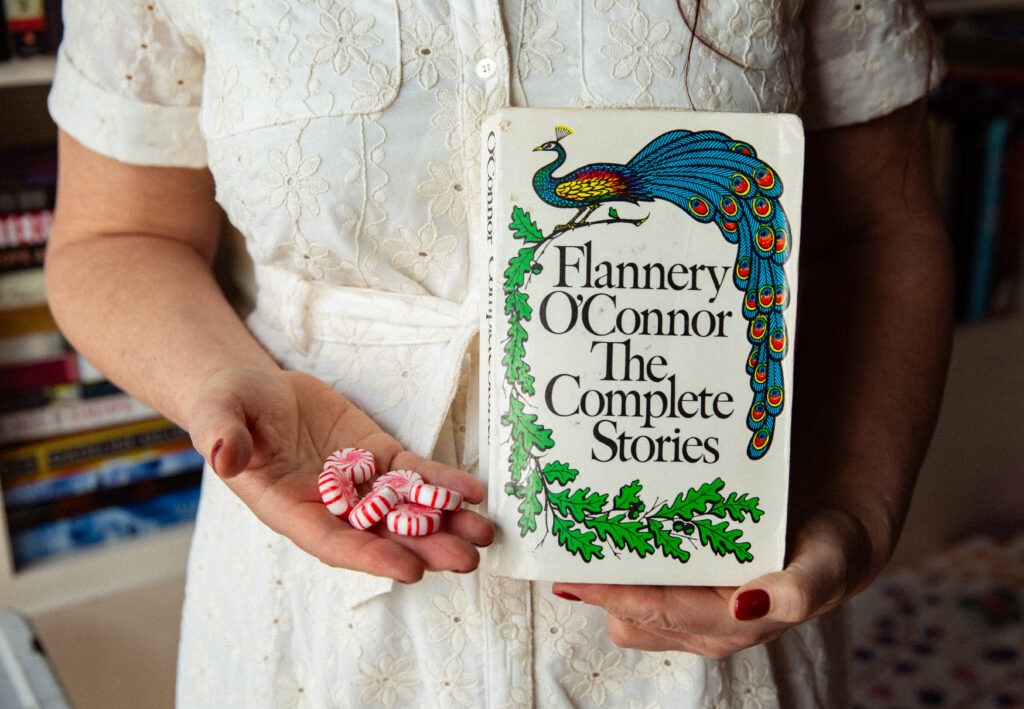
In the story “A Good Man is Hard to Find,” a young woman’s face is “as broad and innocent as a cabbage.” Photograph by Erica MacLean.
I talked to Gooch and to Dr. Amy Wright, whose grandfather lived down the street from the Sanford House restaurant during the era O’Connor used to dine there. (I’m working on a book called “The Writer’s Table,” which will explore what writers including O’Connor ate, so this is research.) Wright is the director of Georgia’s Old Capital Heritage Center, which oversees the building that formerly housed the restaurant, a white clapboard, plantation-style building with columns and a portico. Milledgeville was the capital of Georgia from 1804 to 1868, and Sanford House, back then, was located next to the Old Capital Building. (The restaurant was shuttered in 1966. The building that housed it still exists but has since been moved five blocks west to Hancock Street.) Wright recalled the food at Sanford House in the fifties to be “tasty but very plain” and said that as a child she was impressed that the restaurant served its vegetables in pastel-colored plastic bowls. The detail reminded me of one from O’Connor’s childhood: On a visit at age four to a relative in a convent, she was greatly impressed that the nuns served ice cream molded into the shape of calla lilies.
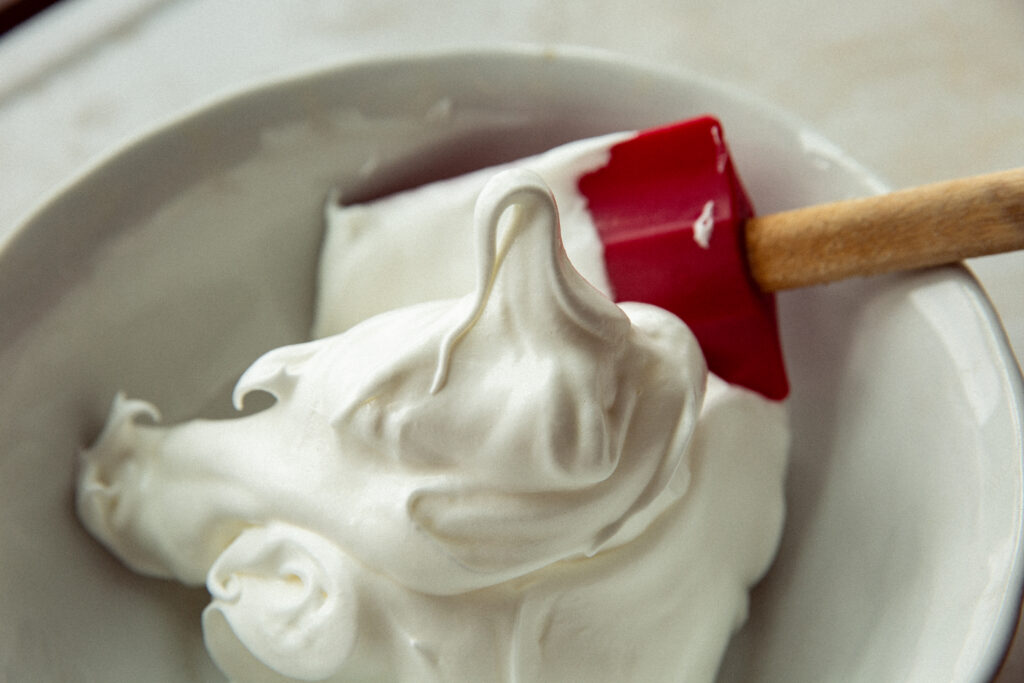
Meringue provides the chiffon pie with its light, melting texture. Photograph by Erica MacLean.
Nonetheless, Gooch told me that “you wouldn’t want to eat what O’Connor ate” and described the cuisine she ate at home with her mother as a “curdled, dry, dyspeptic kind of fare.” At home, O’Connor and her mother rarely had their meals in the dining room. Left to her own devices, O’Connor might eat a tin of sardines for lunch. Once, during the brief time in which O’Connor lived alone in New York City, she served her friend Lyman Fulton nothing but “goat’s milk cheese and faucet water”—which later became a running joke between them. Regina, when she cooked, seems to have done it for show. During O’Connor’s childhood, she hosted elaborate tea parties for her daughter, featuring homemade gingerbread, brownies, hot chocolate, pink cake, and little sandwiches—what Gooch described as “southern fancy comfort food.” But this was a world and lifestyle O’Connor rejected. And the version of them at Sanford House was no pleasure to her either. Gooch said, “It was the ladies who lunch of Milledgeville. It wasn’t her scene at all.” Her mother talked garrulously; Flannery sat in silence.
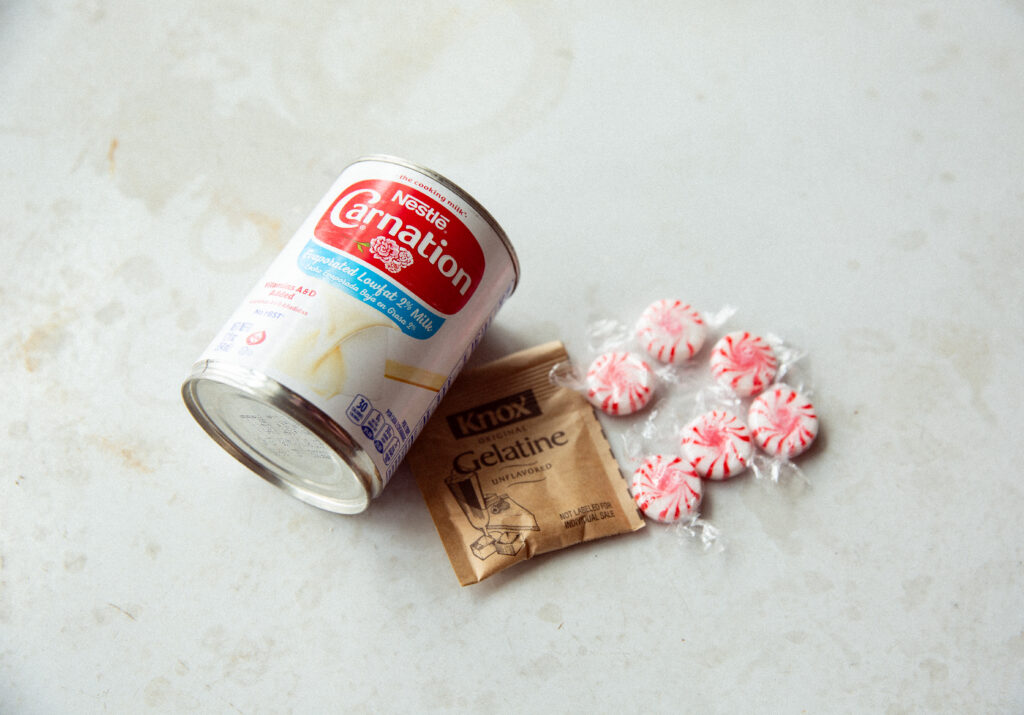
Chiffon pies are set with gelatin, a less-prevalent ingredient in desserts today. Photograph by Erica MacLean.
The owner of the Sanford House restaurant, Mary Jo Thompson, wrote a cookbook in 2008 including some of the restaurant’s most beloved recipes. The book is out of print, but a curator from the Andalusia Farm museum sent me the restaurant’s recipe for the peppermint chiffon pie. To my modern eye, the recipe looked unappetizingly dour. It called for evaporated milk, gelatin, and a premade Keebler’s Chocolate Ready Crust crust. The peppermint flavor and pink color came from melted peppermint hard candy, which I thought would be wishy-washy to the eye and the palate.
I decided to make one version of the pie following Thompson’s recipe, and then also to generate my own blown-out recipe using from-scratch techniques and amped-up retro flavorings. Chiffon pie research online, however, turned up wildly different formulas. The “chiffon” designation is supposed to mean a pie with an airy texture that has been created by mixing a custard base with whipped egg whites. But the most common contemporary recipe I ran across asked for packaged vanilla Jello pudding mixed with Cool Whip. The flavor and color came from food coloring and peppermint extract. It technically wasn’t “chiffon,” and it relied even more on ingredients from packages and cans than the Sanford House version. Eventually I made up my own recipe, making a crust from crushed Oreos, a filling from homemade custard mixed with whipped egg whites and flavored with peppermint extract, and a whipped cream topping mixed with crushed peppermint bark and peppermint candy. I would achieve a pink color with a particularly powerful neon-pink gel food coloring.
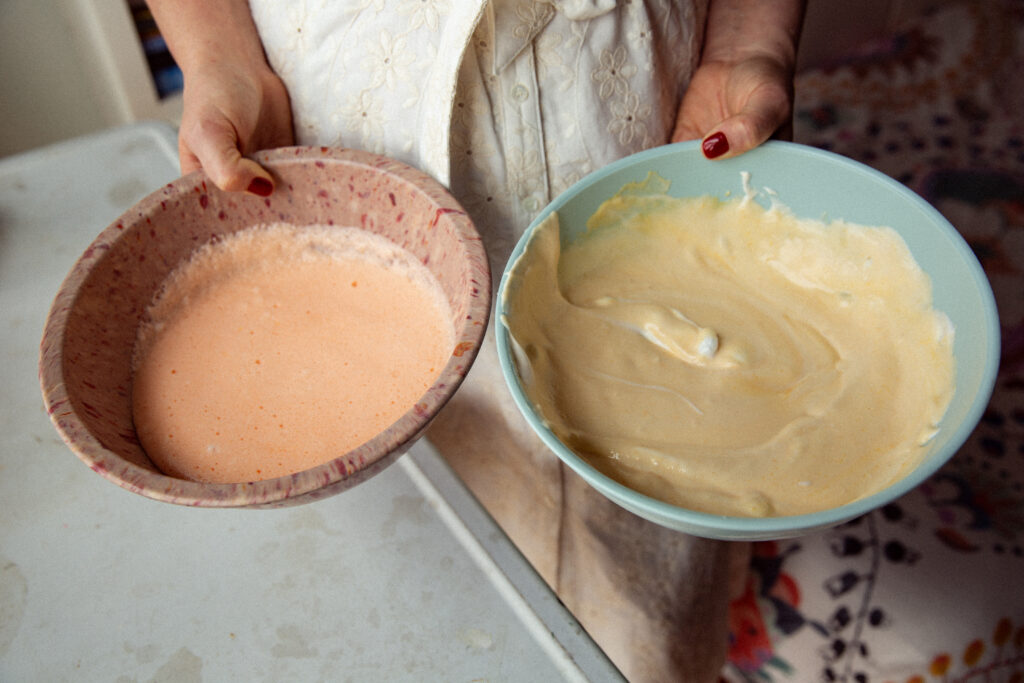
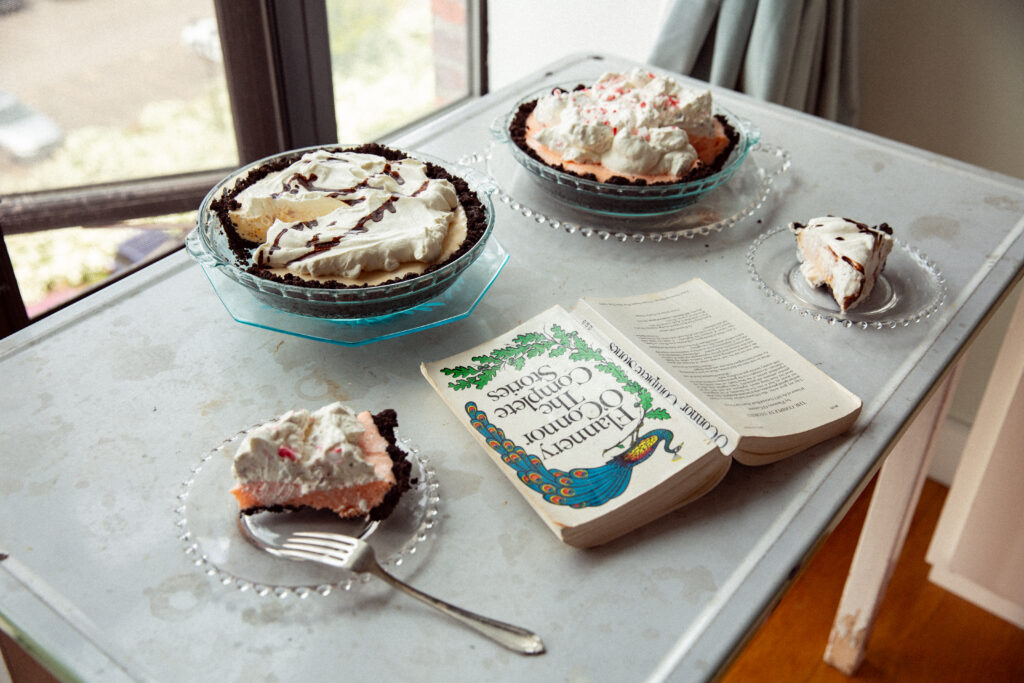
The two pie fillings, side by side. On the left is mine, with the stronger pink color, on the right, Sanford House’s colored with Starlight Kisses. Photograph by Erica MacLean.
The comparison project was slightly hampered by the lack of Keebler Ready Crusts in any of the grocery stores I have access to, so I ended up making Oreo crusts for both the Sanford House pie and my own. Fortunately, having a strict comparison didn’t matter in the end. I didn’t need two recipes because you can’t make a bad peppermint chiffon pie. The Sanford House version was mild, minty, and just sweet enough. Topped with whipped cream and drizzled with chocolate syrup, it was heavenly. The melted peppermint candy smelled a little strange in the pan but created a delicate flavor and lovely pale salmon-pink color. My own version at first seemed like it was going to be lesser. The Sanford House recipe directs cooks to whip the egg whites while adding sugar, creating, basically, a meringue. This is the “chiffon” that you fold into the custard. Most of the chiffon recipes I read did it the other way, whipping the egg whites until they formed stiff peaks, then adding the sugar to the custard base before folding the two together. That’s what I did for my own recipe; it was a mistake. When you introduce a meringue to a custard, it holds its shape and creates a velvety final filling. When you mix plain whipped egg whites with custard, they curdle and break apart. My pie’s filling was rubbery, and its color was a harsh salmon orange. (It turns out a stronger pink food coloring added to a pale-yellow custard makes the pie more orange rather than more pink.) And yet, despite the mistakes, my pie was also mild, minty, just sweet enough, and delicious. It was light and summery, refreshing, and edible.
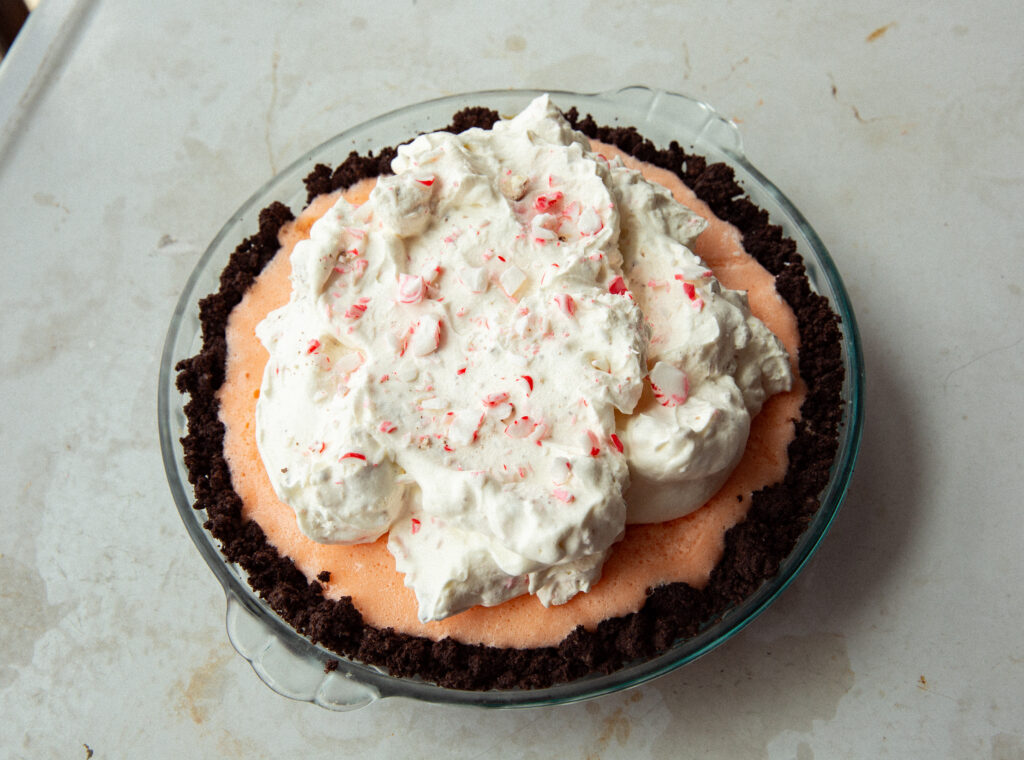
The finished version of my pie recipe. Photograph by Erica MacLean.
I didn’t make O’Connor’s favorite entree of fried shrimp (breaded in crushed saltines, according to the Sanford House cookbook), but after trying the pie, I suspect this extremely simple dish would be pretty good too. The foods O’Connor actually liked—as opposed to those she ate because she didn’t care—sounded a little weird and possibly gross, but reflected her offbeat, wonderful, sensibility. She was a devout Catholic preoccupied almost entirely with work and the immortal soul—but she had great taste in food when she was forced to eat it. Truly adventurous souls might even be convinced to try her favorite drink: a Coca-Cola with a cup of coffee in it.
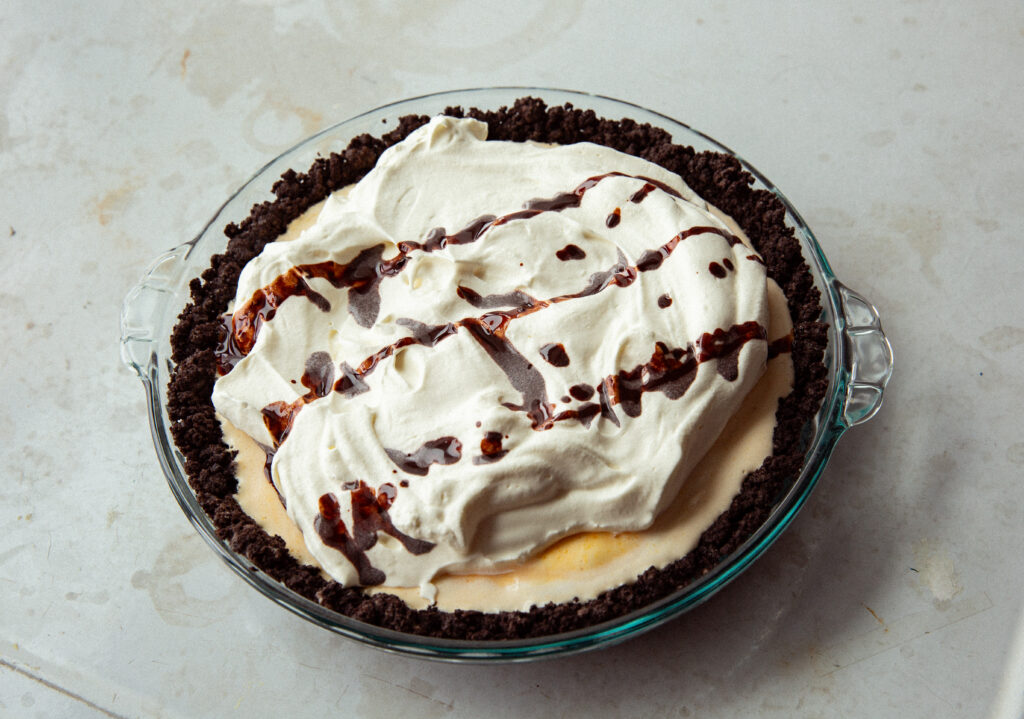
The final pie from the Sanford House recipe. I made my own chocolate syrup from simple syrup and cocoa powder. Photograph by Erica MacLean.
Peppermint Chiffon Pie
Adapted from the Sanford House restaurant recipe.
For the crust:
22 Oreos, crushed
5 tbsp unsalted butter, melted
Preheat the oven to 350°. Mix the butter with the Oreos. Using your fingers or a rubber spatula, press the mixture evenly into an ungreased 9-inch pie plate. Bake for 8–10 minutes.
Photograph by Erica MacLean.
For the filling:
1 tablespoon plain gelatin
1/4 cup cold water
3/4 cup evaporated milk
3/4 cup water
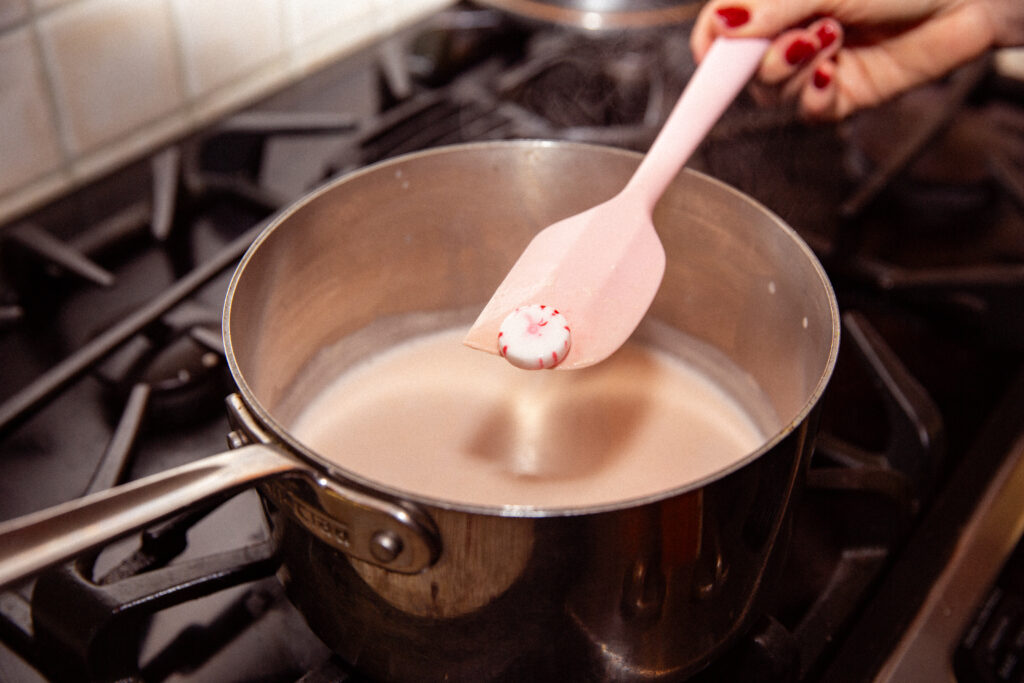
6 peppermint candies (classic, round shape, referred to as “Starlight”)
3 eggs, separated
1/8 teaspoon salt
whipped cream
chocolate syrup
Soak gelatin in 1/4 cup cold water. Combine milk and water and bring almost to a boil. Turn the heat down to low, add the peppermints, and cook, stirring occasionally until they dissolve. Beat egg yolks with 1/4 cup sugar and add to milk. Cook until mixture starts to coat spoon. Remove from heat and add gelatin. Set aside to cool. Beat egg whites until stiff but not dry while slowly adding 1/2 cup sugar. Gently fold the egg whites into the cooled custard. Pour the filling into the cooled pie crust and refrigerate. Spread whipped cream over top just before serving and drizzle chocolate syrup over the cream.
Photograph by Erica MacLean.
Valerie Stivers is a writer based in New York. Read earlier installments of Eat Your Words.
from The Paris Review https://ift.tt/y1LexMc
Comments
Post a Comment